Types of Longboards: Which Riding Style Fits You Best?
You’re probably here because you want to buy a board, but trying to figure out the different types of longboards and longboard shapes feels overwhelming.
The core focus isn’t just the deck shape — it’s really about how you want to ride. A solid, well-built complete setup can handle most of the riding styles we’ll cover, and they all start at.
This guide covers all five longboard riding styles — cruising, dancing, carving, freestyle, and downhill — with skill levels, learning timelines, and gear requirements for each. By the end, you’ll know exactly what type of longboard to get.
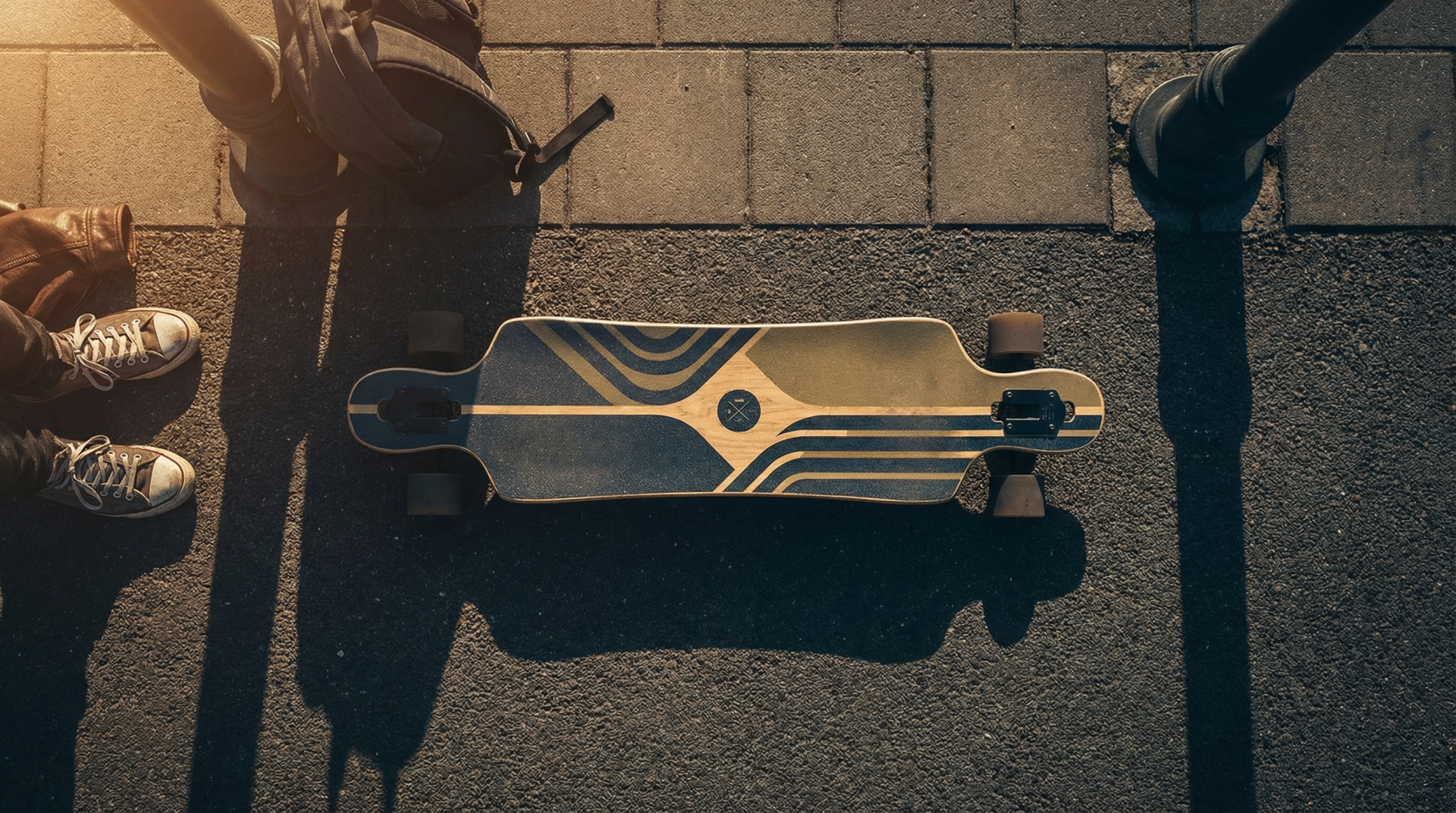
5 Main Longboard Riding Styles at a Glance
Five distinct ways to experience the pavement — from the easiest first push to pro-level mountain speed. Click any style card to jump to the full breakdown.
01
Cruising
Kick, push, and coast.
⭐ Easiest02
Dancing
Flowing footwork on the deck.
🔥 Fastest Growing03
Carving
Deep side-to-side S-curves.
⭐⭐ Pretty Easy04
Freestyle
Flatground tricks & creativity.
⭐⭐⭐⭐ Challenging05
Downhill
High-speed mountain bombing.
Pro Level Only
01 / Cruising
Shop cruising longboards →
Cruising — The Best Place to Start
Cruising really doesn’t need much explanation. You step on, push off, and feel the pavement roll smoothly beneath your feet.
It’s the number one reason people pick up a board. Walking takes too long, lugging a bike is heavy, but a longboard sits right in that perfect sweet spot — 2–3x faster than walking with almost zero effort.
Why a Longer Board is Actually Easier to Ride
A beginner’s biggest enemy is board wobble. Trying to learn on tiny, twitchy setups will kill your confidence fast. As we explain in our best longboard for beginners guide, longer deck types naturally fight instability, giving you the platform you need to build skills safely.
110cm
Wide stance area for fast balance
78–82A
Soft wheels absorb cracks & rocks
2–3×
Faster than walking, less effort

02 / Dancing
Shop dancing longboards →
🔥 Fastest Growing Style
Longboard Dancing — Flowing Footwork on the Deck
This incredibly aesthetic approach is bringing thousands of people who have never stepped on a skateboard straight into the scene. Moves like the Cross-step, the Nose Walk, and the Peter Pan look like surfing on concrete — but they’re genuinely approachable for beginners.
Dancing has a very welcoming learning curve. It demands more time than basic cruising, but it’s nowhere near as mysterious as it looks on social media. There is really only one major barrier to entry.
The Non-Negotiable Factor: You Need Deck Length
Every dancing maneuver requires moving your feet across the deck — stepping left foot over right, walking toward the nose, stepping back. You simply must have the physical space to do that. A 110cm deck is the bare-minimum threshold for a dancing longboard. Anything shorter, and you run out of real estate before completing the step.
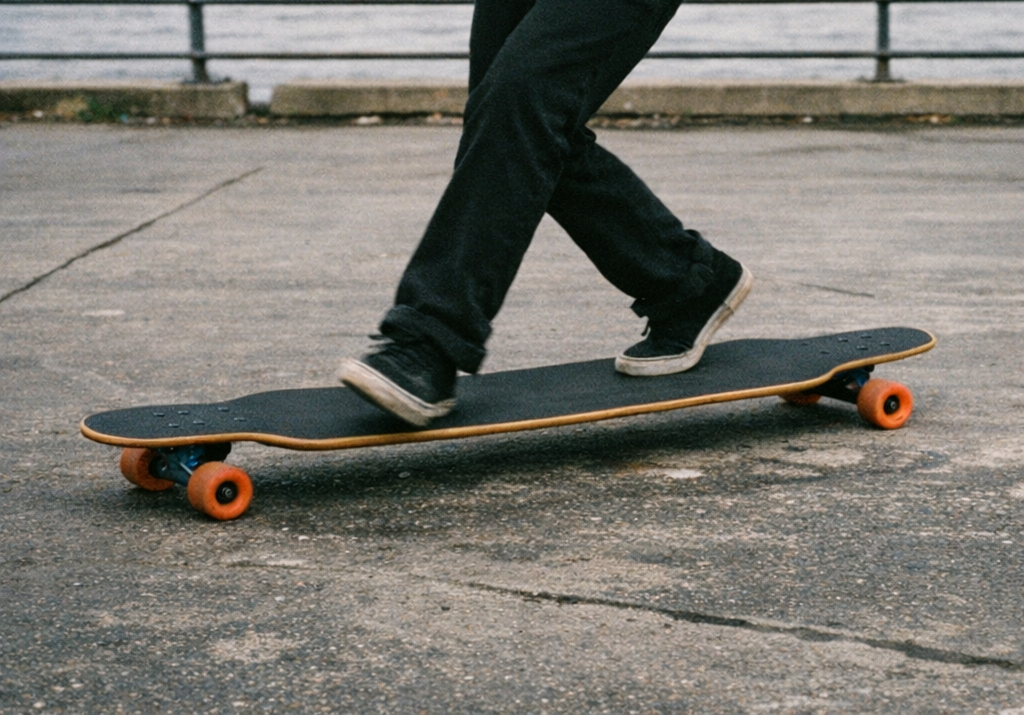
Quick Prep Checklist
1
Lock down your core balance through basic cruising first.
2
Find a wide, smooth, completely flat open space to practice safely.
What the Progression Looks Like
Day 1Finding your stance & basic pushing
Week 1Sustained gliding & gentle turns
Keep PracticingUnlocking endless footwork combos

03 / Carving
Carving — Surfing the Pavement
Carving is what happens when you take cruising and add rhythm. You shift your weight onto your toes, then back to your heels, drawing continuous, flowing S-curves down the street.
When people call it a “surfing” feel, they aren’t using a metaphor. The weight transfer is so identical to pumping down a wave that professional surf coaches use longboard carving for dryland training.
How Long Does It Take to Learn?
1
Day 1–3
Drawing shallow S-curves. You feel the trucks engage, but control isn’t fluid yet.
2
Week 2
Stringing 3–4 carves together without stopping. You start finding the board’s rhythm.
3
Week 4 & Beyond
Digging deep into the edges. That authentic surfing sensation completely takes over.
The gear requirements are straightforward: length, stability, and properly dialed-in trucks. You can loosen or tighten your trucks with a skate tool to find the sweet spot without buying a new setup.
04 / Freestyle
Freestyle — Total Creative Freedom
If it happens on flat ground, looks creative, and involves more than straight-line gliding or carving, it fits here. Blending dancing footwork with sudden spins, kick-tricks, and fluid board flips — freestyle offers the highest skill ceiling of all longboard styles.
What You Can (And Can’t) Do
✓ Longboard Freestyle
- ✓ Flatground pivots and spins
- ✓ Complex cross-step combos
- ✓ Tiger claws and hand-flips
× Not Possible
- × Ollies (no kicktail)
- × Kickflips / Heelflips
- × Skatepark grinds
05 / Downhill
Downhill — A Completely Different Beast
Downhill racing is practically a different sport. Grouped with other styles for completeness, but the reality is stark.
What Downhill Actually Entails
- Bombing paved mountain roads at sustained speeds of 50–80 km/h.
- Riding highly specialized, low-center-of-gravity decks built purely for raw speed.
- Mandatory safety gear: full-face helmets, slide gloves, and impact leathers.
Our complete boards are built for cruising, commuting, dancing, and carving — not downhill racing. That is entirely by design.
A mild slope on your daily route? Our boards handle it flawlessly. Blasting down a mountain at race speeds? That requires specialized gear.
Side by Side
110cm Longboard vs 72cm Mini Cruiser: Which Should You Choose?
If you’re torn between a full-length board and a compact cruiser, this breakdown gives you a straight answer. (Debating a classic street deck instead? Read our full longboard vs skateboard comparison guide.)
| 110cm Longboard | 72cm Mini Cruiser Board | |
|---|---|---|
| Primary Use | Campus commutes / Dancing / Carving | City A-to-B transit / Maximum portability |
| Portability | ❌ Longer, harder to carry inside | ✅ Fits under your arm, on the bus, under a desk |
| Stability | ⭐⭐⭐⭐⭐ Extremely Stable | ⭐⭐⭐⭐ Very Stable |
| Dancing / Footwork | ✅ 110cm is the sweet spot for dancing | ❌ Too short for proper footwork |
| Best For | Beginners / Aspiring Dancers / Campus Riders | Commuters / Portability-First / Backup Board |
Ready to Hit the Pavement?
Every single board ships fully assembled — trucks tuned, wheels mounted, grip tape applied. Open the box, step on, and ride. No tools required.
Types of Longboard: Frequently Asked Questions
There are five core riding styles: cruising, dancing, carving, freestyle, and downhill racing. A high-quality 110cm complete deck handles the first four beautifully. You only need a specialized board shape for downhill racing. For most people, a versatile longboard complete is the smartest entry point.
Not at all. A versatile 110cm board transitions seamlessly across casual commuting, rhythmic carving, dancing footwork, and flatground tricks. You only need to upgrade if you want kickflips (you need a traditional skateboard) or high-speed downhill racing (you need a specialized downhill board).
Always begin with basic cruising. It builds the foundational balance and confidence required for every other style. Master pushing, turning, and foot braking first. Once those feel natural, carving and dancing become logical next steps. Check out our step-by-step how to longboard tutorial for beginners to build that foundation.
The key factors are deck length and grip tape placement. A dancing longboard needs 110cm or more for footwork, and often has bare grip zones in the center to let feet pivot easily. That said, a great dancing board also makes a stable, comfortable daily cruiser — the two uses overlap significantly at the 110cm size class.
Yes. Flex acts like a vehicle’s suspension system. A board with moderate, snappy flex absorbs vibrations from cracked pavement and small rocks, keeping your feet comfortable and forgiving balance mistakes. For beginners, this makes the ride noticeably smoother and more controlled from day one.
Related Articles
→ Is the Pintail Longboard Ideal for Beginners on Flat Roads?
→ The Rise of Carbon Fiber Longboards: Lightness & Strength
→ How Did Longboarding Become So Popular?
About the Author

Jordan Ellis
Founder of Groveride · Former urban transportation analyst, Portland OR · Longboard rider since 2019 · Spent 5 years studying how people move through cities before building the board-buying guide that should have existed.
Read Jordan’s full story →