Longboard vs Skateboard:
Which Is Right For You?
If you are stuck choosing a longboard vs skateboard, you’re in the right place. They might look similar on the surface, but they’re engineered for completely different worlds.
Pick the wrong one, and you’ll likely quit in a week because of the steep learning curve or uncomfortable ride. Pick the right one, and you’ll feel that instant click the moment your feet hit the grip tape.
We break down the exact differences in beginner difficulty, commuting suitability, trick capability, and price — so you can settle the longboard or skateboard which is better debate for your lifestyle once and for all. Complete setups start at $120 for all three styles.
Already leaning towards a longer deck? Skip straight to our best longboard for beginners guide — find your perfect setup in under two minutes based on your height, weight, and riding goals.

The Core Differences at a Glance
Before we get into the deep details of skateboard vs longboard, here is a quick side-by-side technical breakdown:
| Features | Longboard | Cruiser Board | Skateboard |
|---|---|---|---|
| Typical Length | 100–115 cm (approx. 40–45″) | 65–80 cm (approx. 26–32″) | 75–82 cm (approx. 29–32″) |
| Wheel Hardness | Soft (78A–82A) — max shock absorption | Soft (78A–82A) — agile & smooth | Hard (99A–101A) — built for sliding & pop |
| Stability | ⭐⭐⭐⭐⭐ Incredibly stable | ⭐⭐⭐⭐ Very stable | ⭐⭐ Less stable |
| Beginner Difficulty | ⭐ Easiest to learn | ⭐⭐ Fairly easy | ⭐⭐⭐⭐ Steep learning curve |
| Commuting | ✅ Best for long distances | ✅ Best for short/portable trips | ❌ Not recommended |
| Trick Capabilities | ❌ No kicktails for pop | ❌ Limited structure | ✅ Purpose-built for tricks |
| Ollies / Kickflips | ❌ | ❌ | ✅ Standard skill |
| Dancing / Freestyle | ✅ Exclusive deck styles | ❌ | ❌ |
| Price Range | $120–$200 (Complete) | $100–$180 (Complete) | $120–$200 (Complete) |
| Best Suited For | Beginners / Commuters / Dancers | Urban mobility / Transit riders | Skatepark riders / Street tricks |
★ Entry-level price is the same across all three. Let your riding style — not your wallet — make the decision.

Is a Longboard Easier Than a Skateboard?
If you’ve never stepped on a deck before — yes, longboards are significantly easier. And the gap is huge.
When evaluating the longboard vs skateboard for beginners matchup, the extra stability wins every time. Here is the physics behind why:
- Massive Deck Space: A 40+ inch platform gives your feet plenty of room to adjust. You won’t accidentally step off the tail and wipe out.
- Softer Wheels (78A–82A): Soft wheels act like built-in shock absorbers, rolling effortlessly over pebbles, sidewalk cracks, and rough asphalt that would instantly jam a hard street wheel.
- Lower Center of Gravity: A wider wheelbase means slower, more predictable turns. No twitchy micro-ankle adjustments needed just to keep the board moving straight.
- Zero “Pop” Pressure: Beginners on street boards often feel pressured to learn tricks immediately. On a longboard, the only goal is cruising and finding your flow.
That’s why people who spend a month struggling to balance on a street deck can often push, coast, and carve on their first day with a longer wheelbase.
Which One Works for Commuting?
Both longboards and cruisers completely outshine traditional street boards for getting from A to B. The secret is in the urethane wheels.
Hard wheels on city streets transfer every sidewalk crack and asphalt bump directly into your knees — and tiny pebbles can stop hard wheels dead. Soft wheels eat those bumps for breakfast, letting you push effortlessly through your daily route.
✅ The Longboard (40″+) is your best bet when:
- Covering long campus distances (dorm → class → dining hall).
- Navigating less-than-perfect pavement or slight hills.
- You want to go 2–3x faster than walking with minimal pushing effort.
- You prioritize maximum stability and momentum over carrying convenience.
✅ The Cruiser (28″) is ideal if:
- You’re handling short urban commutes and need to tuck the board under your arm inside.
- You rely on public transit (the ultimate subway-to-office connector).
- You need something that fits in a locker or straps to a backpack.


Can You Do Tricks on a Longboard?
This is where the most confusion happens regarding the difference between longboard and skateboard. The answer depends entirely on what you define as a “trick”:
✅ What you CAN do:
- Boardwalking & Dancing (cross-steps, nose walks) — exclusive to longer decks.
- Deep carving & pumping — the authentic surfing-on-concrete feel.
- Freestyle flatland maneuvers (pirouettes, tiger claws).
- Freeriding (high-speed stand-up slides).
❌ What you CANNOT do:
- Ollies — no pronounced kicktails for popping the board into the air.
- Kickflips / Heelflips — same structural limitation.
- Skatepark grinds or coping stalls — not built for rails and ledges.
Watching gritty street edits with stair sets and handrails? That’s street skating. Watching flowy, rhythmic dancing or aggressive downhill slides? That’s longboarding.
Want to learn Ollies? Check out our classic skateboard collection for street tricks. Want to carve and dance? Learn about the types of longboard riding styles to find your perfect fit.
Longboard vs Skateboard: The 2-Minute Decision
Which board type matches your riding goals?
💡 Be honest about your actual riding goals, not just what looks cool. Quality setups for all three styles start at $120–$200.
LONGBOARD
Cruising and stable riding
Perfect for campus commutes, covering serious distance, and absolute beginners who want the friendliest learning curve. Also the go-to if you want to dance on your deck or experience deep, surf-like carves on pavement. Wide trucks and soft wheels make rough roads feel like butter.

CRUISER
Compact urban mobility
Built for the rider who needs quick, short-distance mobility but constantly has to carry their deck up stairs or into coffee shops. It’s the ultimate urban travel companion. If you’re weighing a penny board vs longboard, a wooden cruiser gives you the portability of a Penny but with infinitely better foot space and control.

SKATEBOARD
Street tricks & skatepark
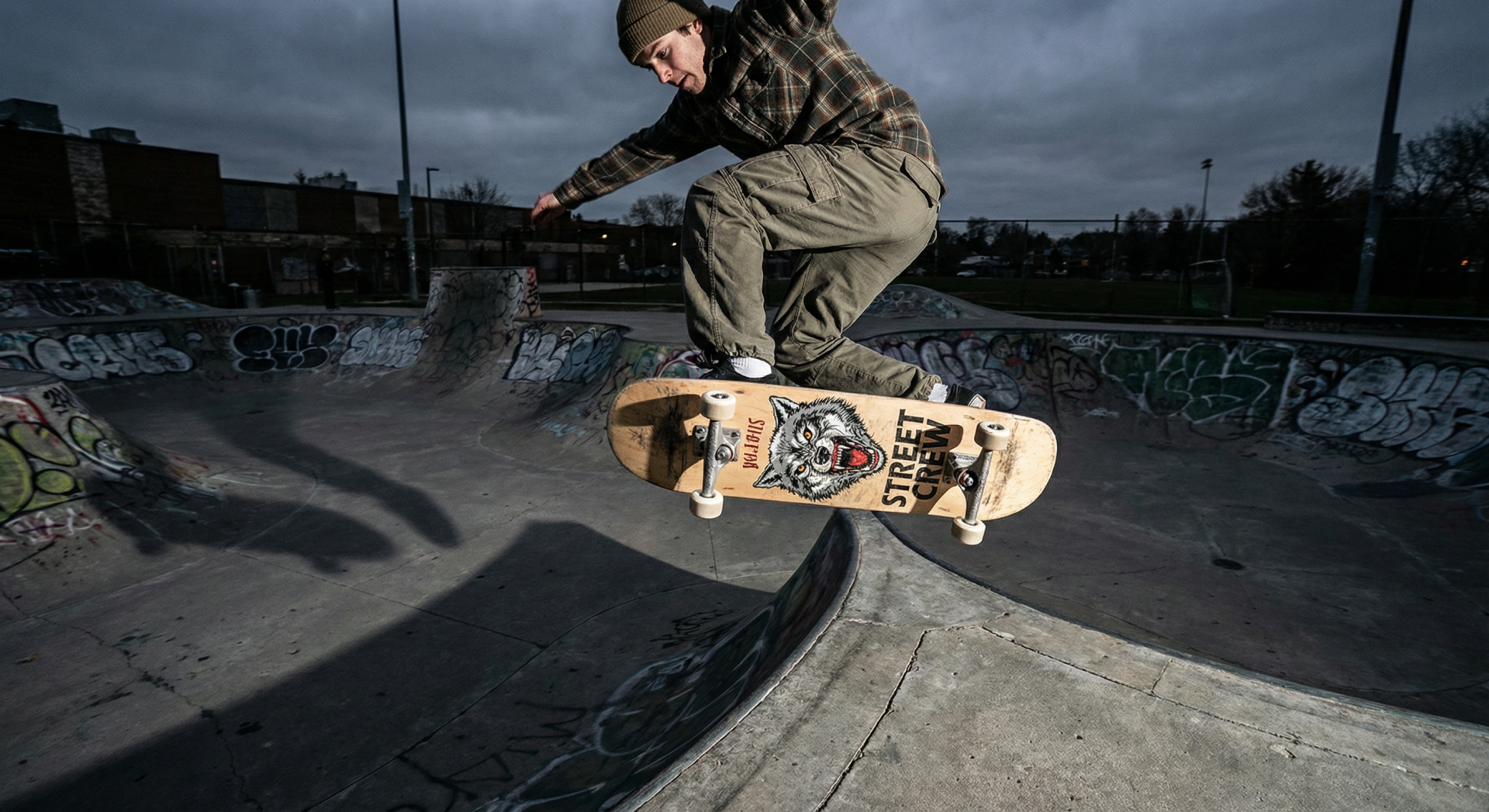
If you specifically want to learn kickflips, hit the local skatepark, and ride the bowls, this is your only option. Engineered with hard wheels and kicktails to handle heavy impact and technical maneuvers. Not great for commuting, but essential for street culture.
Related Articles
→ Longboard vs. Cruiser Skateboard: Which One Should You Buy?
→ Longboard vs. Shortboard: The Commuting Experience Compared
→ What is a Longboard? Types, Components & Beginner Guide
About the Author

Jordan Ellis
Founder of Groveride · Former urban transportation analyst, Portland OR · Longboard rider since 2019 · Spent 5 years studying how people move through cities before building the board-buying guide that should have existed.
Read Jordan’s full story →