
Choosing the right skateboard for your child is not only about safety but also about making riding more enjoyable. This article explains the differences between longboards and other skateboard types, size options, and essential safety gear, making it easy for beginners to get started.
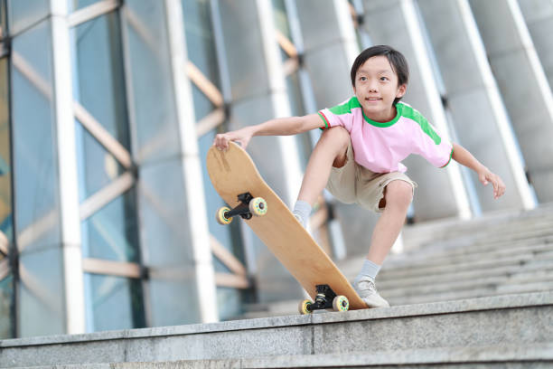
Why is the right skateboard so important for kids?
Choosing a skateboard isn’t just about giving your child a board; it’s also crucial for ensuring safety and improving learning efficiency. A suitable longboard or skateboard can reduce the risk of falls while helping children master balance and skills more quickly. Skateboarding also develops coordination, balance, and physical fitness while also helping children develop independent thinking and social skills in group activities.
Whether riding on the flat ground in the park or practicing on the streets on weekends, having a suitable skateboard is a prerequisite for children to get started smoothly.
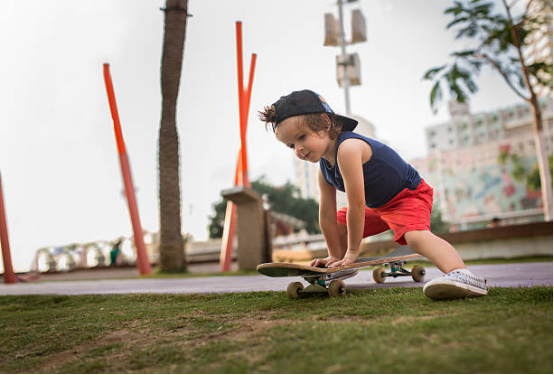
Characteristics of different types of skateboards
1. Traditional skateboard
The classic twin-tail design is perfect for tricks and flips. The short, flexible board is perfect for beginners or kids who enjoy doing tricks.
2. Longboard
Longer and wider than traditional skateboards, they offer a smoother ride, perfect for flat-land cruising or light downhill riding. While they don’t focus on tricks like shortboards, they’re very comfortable for smooth gliding and long-distance practice. The “long” here is naturally separate from the “board,” describing both the length and stability of the board.
3. Cruiser
A cross between a shortboard and a longboard, it’s perfect for daily city commuting or casual cruising. Its design prioritizes comfort and portability.
4. Mini Board
Designed for children or toddlers with smaller feet, it is lighter and easier for beginners to practice steering and maintaining balance.
How to choose the right skateboard size for your child?
The main considerations when choosing a skateboard size are deck width, length, and wheel size:
Deck width: For children under 8 years old, choose 6.5–7 inches; for older children, consider 7–8 inches to ensure that the shoe fits and the foot feels stable.
Deck Length: 28–32 inches is most common. Shorter boards are more nimble but less stable; longer longboards are easier to maintain balance on.
Wheel size and durometer: Small wheels (50–54 mm) are good for tricks, while larger wheels (55–60 mm) are good for cruising or rough terrain. 78a–87a durometer provides grip, while 88a–101a is faster and suitable for performance or street riding.
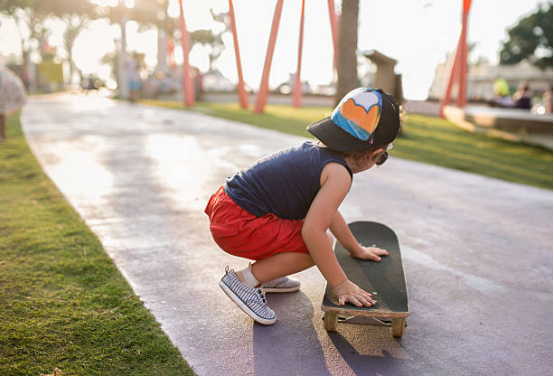
Popular Science on the Components of a Skateboard
Material and shape
Most decks are made of maple, which is strong and flexible; bamboo or plastic decks are also occasionally seen. The depth of the concave surface of the board affects the sense of control: deep concave is suitable for tricks, while shallow concave is more suitable for beginners to stabilize the board.
truck
The truck size should match the width of the deck. Most trucks are made of aluminum, though higher-end trucks are occasionally made of titanium or magnesium to reduce weight and increase strength. Adjustable trucks can help children more easily control the turning radius.
Bearings and wheels
Bearing grades are evaluated according to ABEC standards, with grades 7–9 suitable for skating requiring high speed and precision. Wheel diameter and hardness influence speed, stability, and grip. Steel bearings are sufficient for daily practice; ceramic bearings offer better performance but are more expensive.
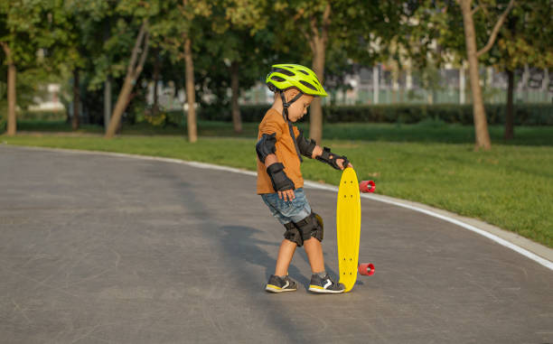
Safety equipment cannot be ignored
Helmets: Make sure they meet CPSC, ASTM, or Snell standards
Knee pads and elbow pads: protect joints and prevent injuries from falls
Wrist support: supports the wrist and reduces the risk of fracture or sprain
Skateboard shoes: Flat shoes have good grip and maintain board control
The investment in safety equipment ranges from about $50 to $100 and is the basic guarantee for beginners to ski.
Longboard daily riding and practice tips
When choosing a longboard, a low-profile deck and soft wheels are more suitable for beginners, making it easier for children to maintain balance and master steering. For cruising or practicing speed, try a slightly larger board with harder wheels to experience different ground feedback.
Beginners can consider pre-assembled skateboards, which can be used right out of the box; customized skateboards are suitable for experienced children or families with individual needs and can be freely combined according to the board, wheels, and trucks.
Tips: Common Misconceptions
Can young children use adult skateboards?
While technically possible, the inappropriate size and weight may increase the risk of falls. It is safer to choose a skateboard that fits your child’s body shape.
Give your children a safe and fun skateboarding experience
Choosing a skateboard for your child is more than just picking a board; it’s crucial to ensuring safety, learning, and having fun. Understanding the differences in types, sizing, and safety gear can help make skateboarding a positive avenue for your child’s healthy, creative, and social development.
In practice, let your child practice riding a longboard or shortboard in a safe environment, gradually experimenting with flatland cruising and simple maneuvers. The world of skateboarding is rich and diverse, and with the right board and protective gear, every ride can be filled with fun and opportunities for growth.