Have you ever come across videos of people effortlessly gliding, turning, or even dancing on long boards in streets, alleys, or along seaside promenades? Doesn’t that feeling of freedom and drifting with the wind instantly capture your heart?
Perhaps you’re wondering if that’s a skateboard? It looks a bit different. That’s right, what you’re seeing is most likely a longboard!
Longboarding is more than just a means of transportation; it’s an expression of a lifestyle, a trendy sport that lets you rediscover the world. It’s more stable and easier to learn than traditional street skateboarding, giving you a smooth and enjoyable gliding experience, as if you’re surfing on land.
If you’re drawn to longboarding by these beautiful images but are unfamiliar with the term “longboard” and unsure where to begin, then congratulations, you’ve come to the right place! This comprehensive guide, like a seasoned longboarding friend, will lead you step-by-step through unveiling the mysteries of longboarding, from the most basic components to various cool riding styles, and how to take your first step safely. After reading this, you’ll have a complete understanding of longboarding and be able to confidently choose your first board and embark on your longboarding journey.
What is a long board?
Longboarding originated in California and Hawaii in the 1950s, when surfers began attaching roller skate wheels to wooden boards to experience the thrill of “surfing” on the streets even on calm days. What began as an off-season alternative to surfing has evolved into a distinct sport, encompassing a wide range of activities from leisurely beach strolls to intense downhill racing.
Simply put, a longboard is a type of board that is longer and wider than a traditional street skateboard. It typically ranges in length from 33 to 60 inches and is inspired by 1950s surf culture. Unlike street skateboards, which are primarily used for street tricks (such as Ollie and Kickflip), the core design philosophy of longboards is to provide a more stable and smoother gliding experience, allowing you to cruise leisurely, commute, and even perform elegant dance moves on the board.
So, what are the differences between longboards and traditional street skateboards?
- Size and Stability: Longboards have a longer and wider deck, which directly translates to greater stability. Imagine standing on a small boat or a yacht—which is more stable? A longboard is like a yacht, giving your feet more space and making it easier to maintain your balance.
- Wheels: Longboards typically come with larger, softer polyurethane (PU) wheels. These wheels absorb bumps better, easily traversing pebbles and cracks, giving you a “butter-smooth” ride even on rough surfaces. Street skateboards, on the other hand, have smaller, stiffer wheels, making them more suitable for performing tricks.
- Trucks: Longboards commonly use reverse kingpins (RKP). This design allows for a wider, smoother curve when turning, giving the feeling of surfing. Street skateboard trucks are better suited for quick, agile turns and tricks.
- Applications: Longboards are primarily used for cruising, commuting, downhill riding, dancing, carving, and land surfing. They emphasize speed, smoothness, and comfort over long distances, rather than aerial jumps or flips.
In short, if you want to experience a relaxed ride, enjoy the scenery along the way, or need a stylish mode of transportation, a longboard is undoubtedly the ideal choice.
The core components of a longboard – an easy-to-understand explanation
A complete longboard consists of five key components. When you first see them, they might seem a bit complicated, but don’t worry, I’ll explain the function of each component and how they affect your riding experience in the simplest way possible, just like a friend.
Deck: Your foothold

- What it is: The plank is the wooden board you stand on. It is the “skeleton” of the longboard, supporting your body.
- How it affects your ride: The length and width of the board directly impact your stability and foot comfort. Longer boards are generally more stable and suitable for high-speed or long-distance riding; shorter boards are more agile and better suited for navigating city streets. The board material also affects its elasticity and durability.
- How beginners should choose:
- Materials: Common materials include Canadian maple (multi-layered, hard and durable, providing a solid feel), bamboo (lightweight, naturally elastic, and softer to ride), or composite materials (bamboo + fiberglass, combining toughness and strength). For beginners, maple boards are sturdy and reliable, while bamboo boards offer a more comfortable and bouncy experience.
- Length and width: A longer board (such as 38-42 inches) will make you feel more stable and easier to balance. A wider board will provide more space for your feet and increase comfort.
Trucks: Your steering system
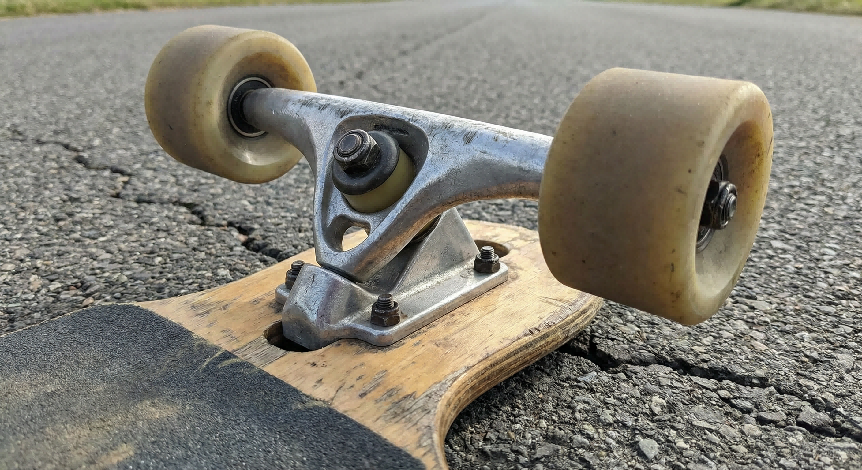
- What it is: The support frame is a metal component that connects the board surface and the wheels, usually consisting of two parts, shaped like a “T”. They are the “steering mechanism” for longboards.
- How it affects your ride: The construction of the bracket determines the steering sensitivity and cornering radius of your board. Rear-mounted brackets (RKP) are standard on longboards, allowing for wider, smoother cornering when leaning forward, feeling like you’re “carving” the road. Bracket tightness also affects steering: tighter brackets provide more stability but less agility; looser brackets offer more agility but may feel unstable at high speeds.
- How beginners should choose: Ensure your board has a reverse kingpin (RKP), which is crucial for smooth longboard cornering. A kickstand width (usually 150mm or 180mm) that matches the board width provides optimal control. For beginners, the factory-set kickstand tension is usually fairly even; you can fine-tune it later to your liking.
Wheels: Your riding comfort and speed
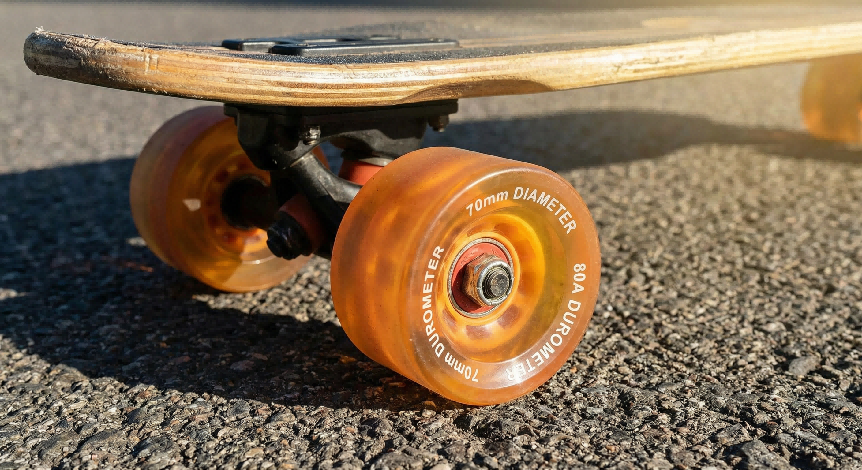
- What they are: Wheels are the part of the longboard that contacts the ground, and are usually made of polyurethane (PU). They are the “shoes” of the longboard.
- How it affects your ride: Wheel diameter and stiffness (Durometer) are two key parameters that directly affect your riding speed, traction, and comfort.
- Diameter: The larger the wheel (e.g., 70mm+), the stronger the rolling inertia, the faster the speed, and the easier it is to roll over small stones, cracks and uneven surfaces, making you feel like you are gliding on butter.
- Stiffness (A value): The softer the wheels (the lower the A value, such as 78A-82A), the stronger the grip and the better the shock absorption. When riding on rough roads, the vibration felt under your feet will be significantly reduced, resulting in excellent comfort. Imagine soft wheels as your sneakers and hard wheels as high heels—which is more comfortable to walk in?
- For beginners: We strongly recommend choosing wheels with a larger diameter (70mm or larger) and a medium-to-soft stiffness (78A-82A). This combination provides faster speed, better maneuverability, and the most comfortable riding experience, allowing you to ride with confidence instead of being bothered by bumpy roads.
Bearings: Your rolling engine
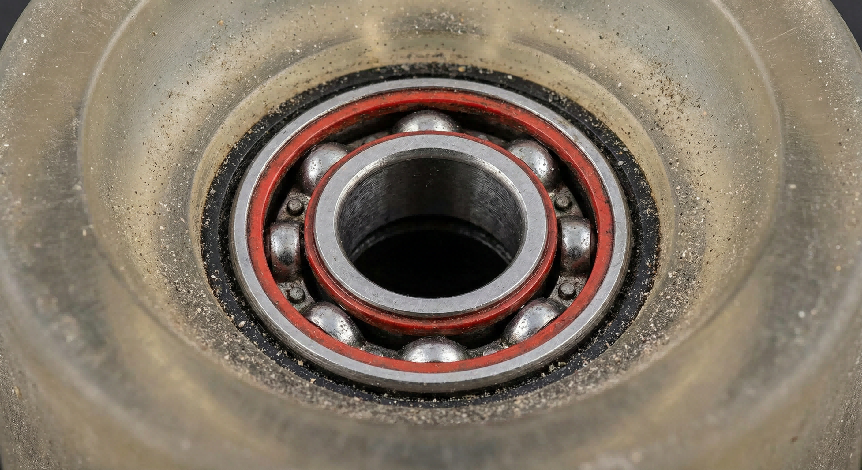
- What it is: A bearing is a set of small steel balls installed in the center of each wheel, allowing the wheel to rotate freely and smoothly. They are the “engine” of a longboard.
- How it affects your ride: The quality of the bearings directly determines how fast and how long your wheels can spin. Good bearings allow your skis to glide a long distance with a push, reducing the frequency of your pushes and making riding more effortless and smoother.
- How beginners should choose: Most high-quality full longboards come with ABEC-7 or ABEC-9 grade bearings. These grades of bearings are sufficient to provide a very smooth rolling experience, so you don’t need to worry.
Sandpaper: Making you as steady as a mountain
- What it is: Sandpaper is a rough surface that is attached to the top of the board. It acts as a “non-slip mat” for longboards.
- How it affects your ride: Sandpaper significantly increases the friction between your shoes and the board, preventing your feet from slipping while gliding or turning, giving you a solid grip and plenty of confidence. Without sandpaper, your feet will slide like they’re on ice!
Longboard shapes – each shape brings you a different experience.
Longboards come in a wide variety of shapes, each with its unique design and suitable riding style. Understanding these shapes can help you better understand which board might be better suited for your beginner experience.
Pintail (torpedo board/water droplet board): A classic cruising choice

- Appearance: Classic teardrop or torpedo shape, gradually narrowing at both ends and wider in the middle.
- Suitable for: Leisurely cruises, beach surfing, and those who appreciate a retro surfing experience.
- Cycling experience: It is very stable, with smooth steering, and the wheel groove design on the board surface cleverly prevents “wheel bite” (the wheel hitting the board surface and causing an emergency stop). It is one of the most recognizable longboard silhouettes.
Drop-Through: Your top choice for a stable start!
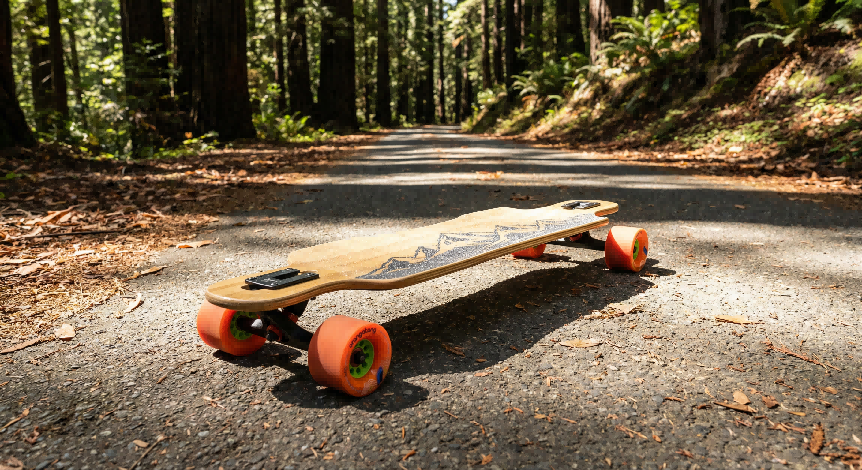
- Appearance: The bracket is installed through the opening on the board surface, so the board surface is lower than the bracket, resulting in a lower overall center of gravity.
- Suitable for: Longboard beginners, commuters, and anyone seeking maximum stability and an easy-to-push experience.
- Riding experience: The center of gravity is about 1 inch low, which makes your board incredibly stable and effortless to push, feeling as solid as your feet on the ground. It gives you a lot of confidence and is our highly recommended entry-level board. (Click here to explore our longboard range).
Top Mount: The Joy of Agile Steering
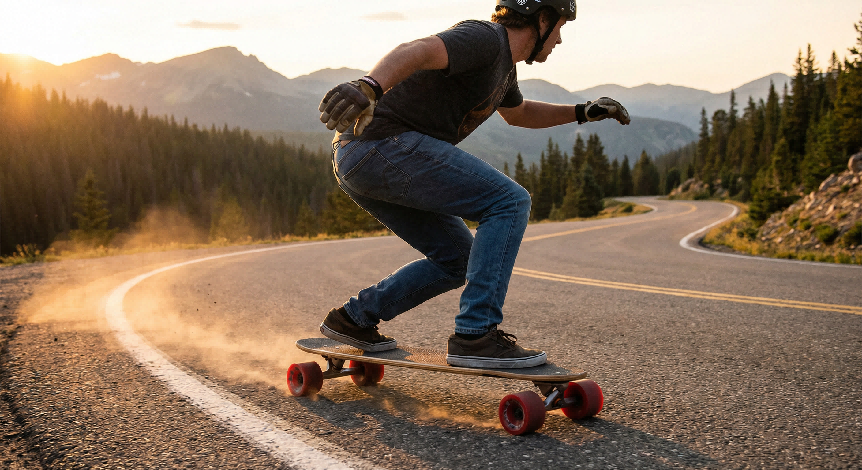
- Appearance: The panel is mounted directly on top of the bracket, which is a traditional installation method and results in a relatively high center of gravity.
- Suitable for: Sculpting enthusiasts, those with some basic skills, and those who seek more responsive steering and a more direct road feel.
- Riding experience: The higher center of gravity means more sensitive and responsive steering, a bit like carving waves on a surfboard, but you need to master the basic balance to ride it better.
Drop-Down: The King of Comfort for Long Commutes
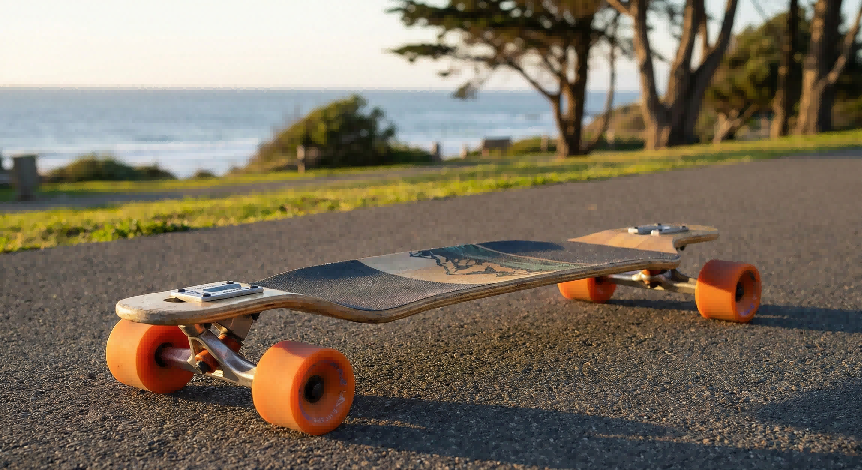
- Appearance: The platform is further recessed below the bracket mounting point, forming a deep “groove”, and the center of gravity is lower than that of Drop-Through.
- Suitable for: Long-distance commuters and those who need the ultimate comfort and effortless driving experience.
- Riding experience: The extremely low center of gravity makes pushing almost effortless, and your feet comfortably “sink” into the board, providing unparalleled stability and comfort for long-distance gliding.
Dancer (danceboard): A stage on wheels
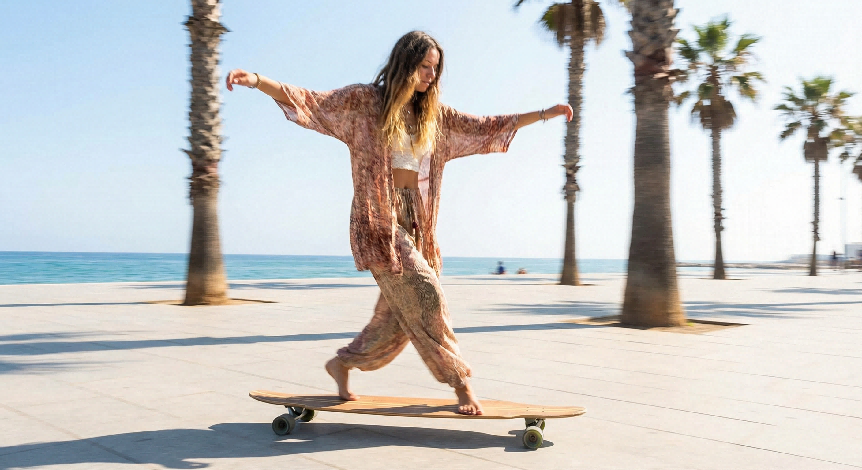
- Appearance: Typically long (42-48 inches), wide, and symmetrical, with ample space at the front and rear.
- Suitable for: Creative skaters who are interested in freestyle footwork, spins and crossovers on the board.
- Cycling experience: The spacious deck is like a mobile stage, allowing you to “dance” and express yourself freely, making it very entertaining to watch.
Mini/Cruiser: Your Flexible Urban Companion
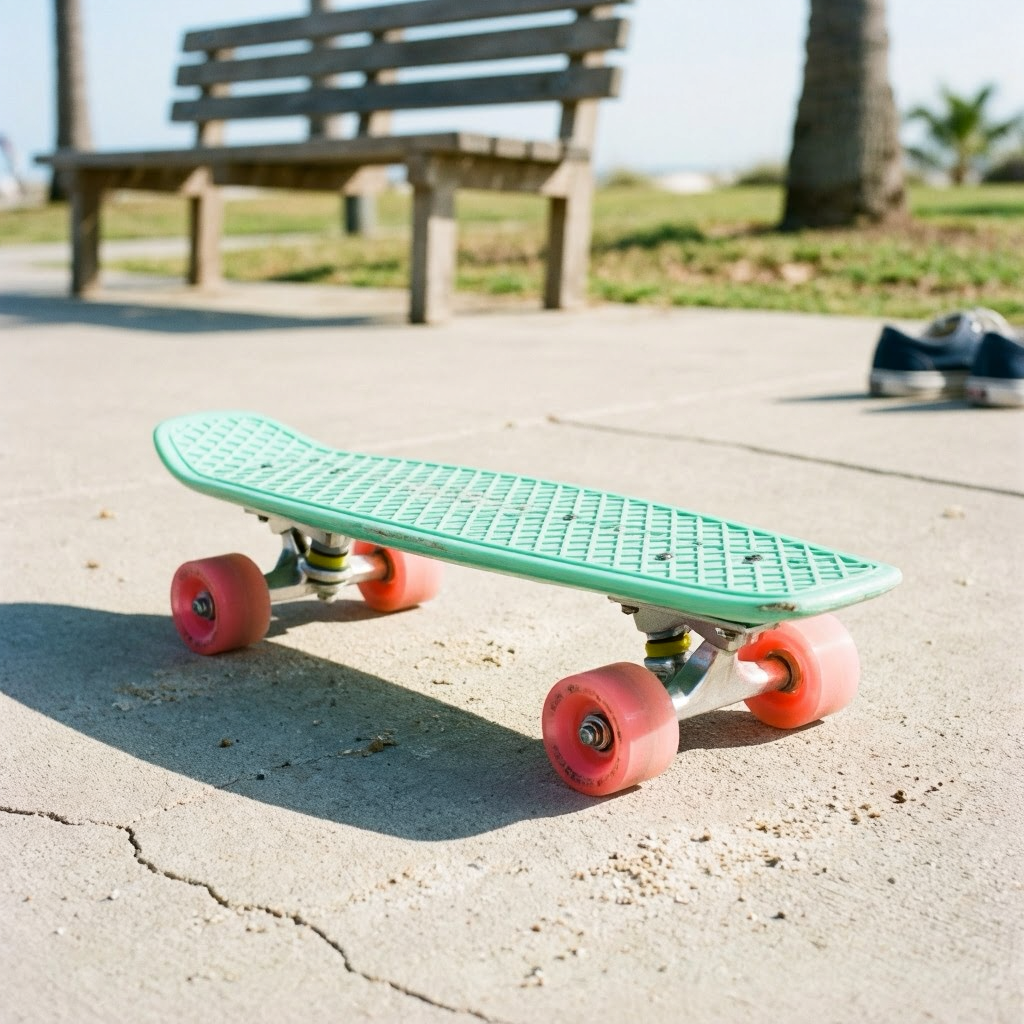
- Appearance: Shorter than a standard longboard (28-33 inches), but usually wider than a street skateboard, with larger and softer wheels.
- Suitable for: City commuters, campus gliders, and those who need portability or need to navigate through crowds.
- Cycling experience: Flexible and lightweight, with agile steering, it is perfect for navigating city streets or carrying around on public transport.
Longboard riding style – which one are you?
One of the charms of longboarding is its diverse range of riding styles, each offering a different kind of fun and experience. You might find yourself naturally drawn to one or more of these styles.
Cruise and Carving: The Art of Effortless Flow
- What it is: The most popular way to ride, gliding effortlessly by tilting your body weight from side to side, allowing the board to trace a smooth S-shaped arc.
- Suitable for: Most beginners, and anyone who wants to enjoy a leisurely and relaxing cycling experience.
- The feeling: Like surfing on land, gliding effortlessly, enjoying the breeze on your face, a kind of mobile meditation.
Commuting: Exploring the city on a skateboard
- What it is: Using a longboard as a practical means of transportation to travel between campuses, parks, or city streets.
- Suitable for: College students, urban white-collar workers, or anyone who wants to get around in a cooler and more environmentally friendly way.
- Feeling: Efficient and fun, allowing you to experience your surroundings from a unique perspective, making every trip enjoyable.
Dancing: Ballet on Wheels
- What it is: Performing complex choreographic movements such as footwork, spins, and cross steps on a sliding longboard.
- Suitable for: Creative skaters who pursue artistic expression and enjoy challenging their physical coordination.
- Feeling: It’s like dancing with your board, fluid and expressive, with every movement full of rhythm.
Downhill: A challenge of speed and passion
- What it is: Speeding down steep slopes, seeking the thrill of an adrenaline rush.
- Suitable for: Experienced and highly skilled extreme sports enthusiasts.
- Feel: Pure speed and passion, but requires a high degree of focus and precise control.
Freeride: The art of gliding
- What it is: Using various slide techniques to control speed, turn, or perform freestyle maneuvers.
- Suitable for: Intermediate skaters with some basic skills who want to expand their skills and enjoy gliding on various terrains.
- Feel: Controlled drifting, a stylish way to gracefully navigate the road.
Surfskating: Surfing on land
- What it is: It uses a specially designed surfboard to simulate the pumping and turning motions of surfing on land.
- Suitable for: Surfers who want to practice when there are no waves, or anyone who wants to experience a unique “surfing” feeling.
- Feel: Like carving on continuous waves, it can move forward continuously through the pump plate without pushing the ground.
Ready to delve into each style? [Read our complete riding style guide to find your perfect style!]
How long does it take to learn your strengths?
You might worry, “Can I learn to longboard? Will it be difficult?” Don’t worry, the barrier to entry for longboarding is much lower than you think!
I can tell you with certainty that the vast majority of beginners can find their balance and learn to propel themselves on their first try.
This is our timeline based on experience:
- Balance and Propulsion: Most people can master basic balance and gliding within one to two hours.
- Foot Braking: Learning to use the foot brake usually takes one to two days of practice to find the feel for slowing down and stopping safely and effectively.
- Basic Carving: Mastering basic turning and S-shaped carving techniques can usually be achieved within a week.
Why are longboards easier to learn than traditional skateboards?
There are several reasons why longboards are so beginner-friendly:
- Larger board surface: It provides more standing space and a wider stance, making it easier for you to maintain your balance.
- Softer wheels: They absorb road vibrations better, making you feel more comfortable and reducing the fear caused by uneven roads.
- Lower center of gravity: Especially with drop-through boards, the center of gravity is closer to the ground, making it significantly easier to push the board and maintain stability. You feel more “grounded,” thus building confidence faster.
Remember, longboarding is about enjoying the process and the flow. Give yourself some time, and you’ll find it easier to pick up than you think, and you’ll soon be gliding with confidence!
What protective gear do you really need?
Safety first! Like any sport, longboarding requires some basic protective gear to ensure your safety, especially during the learning phase.
Like an old friend, I must emphasize that you shouldn’t underestimate the role of this protective gear; it can turn a fall into a safe one.
Minimum necessities:
- Skateboard Helmet: This is the most important! Your head needs the most protection. Always choose a skateboard helmet that is ASTM F1492 certified, not a bicycle helmet. Skateboard helmets are designed to better withstand multiple impacts, protecting the back of your head and sides.
- Wristbands: When you fall, your instinctive reaction is often to use your hands to brace yourself. Wristbands can effectively prevent wrist sprains or fractures, protecting your hands in the event of an accident.
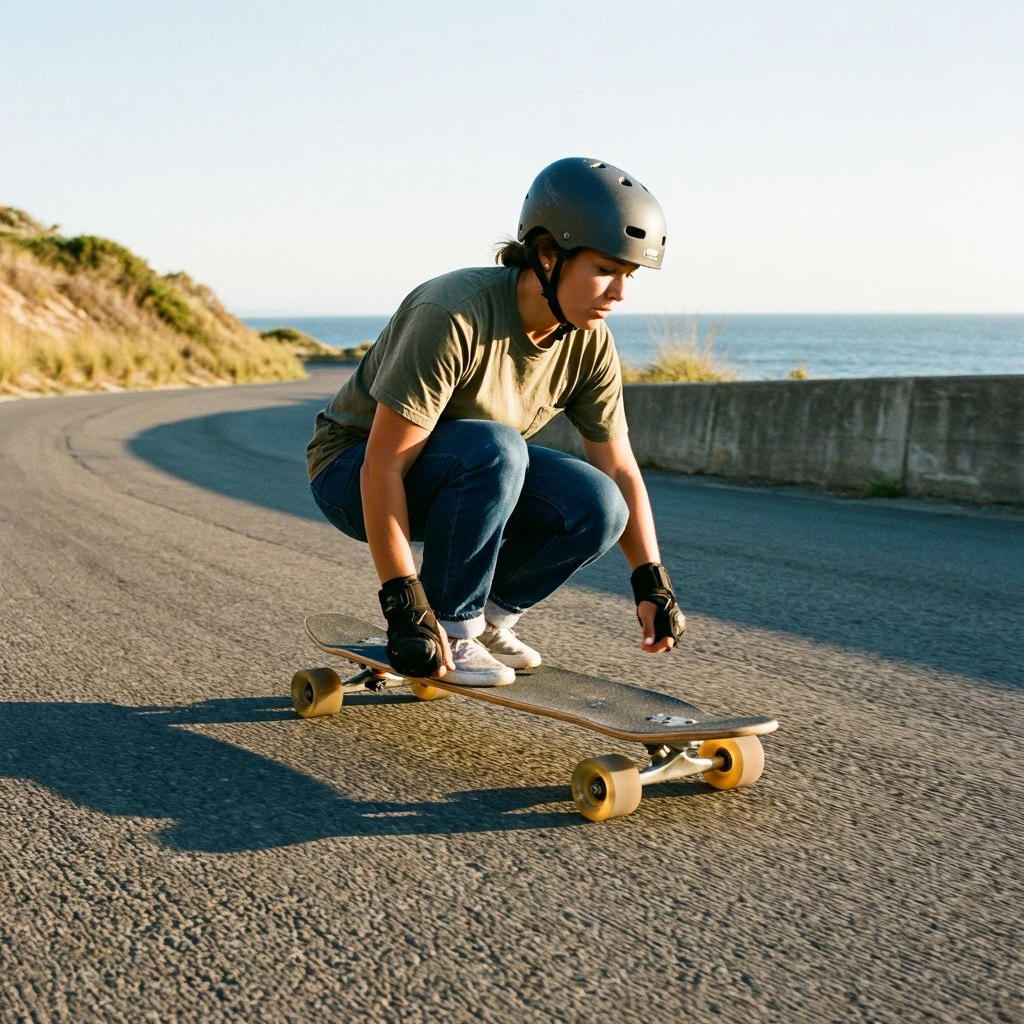
Recommended (if gliding beyond flat ground):
- Knee braces: If you plan to try gliding on small ramps or learn more challenging moves, knee braces can provide extra protection for your knees, preventing chafing and impact.
Remember, wearing protective gear is to make you more confident and relaxed as you try and learn, not because you’re certain you’ll fall. It’s your safety net, allowing you to enjoy longboarding without worry.
How to maintain your longboard (essential knowledge for beginners)
A well-maintained longboard can last longer and provide a more enjoyable riding experience. In fact, daily maintenance of a longboard isn’t complicated; just remember a few simple tips to keep your board in top condition.
- Keep dry: Water is the number one enemy of longboards! Maple planks exposed to moisture for extended periods will delaminate, and bearings will rust, affecting wheel rotation. Therefore, never ride in the rain, and if your planks accidentally get wet, be sure to dry them immediately.
- Regularly check and tighten the bracket: The bracket screws may loosen with use. Regularly checking and tightening them will ensure your steering remains responsive and also improve safety.
- Cleaning bearings: If you notice your wheels starting to make noise or sliding less, it’s likely that the bearings are dirty. Learning how to remove and clean the bearings can revitalize your wheels.
- Replace sandpaper when it wears down: Sandpaper wears down with use and loses its grip. When you feel your feet starting to slip on the board, it’s time to consider replacing the sandpaper to ensure you always maintain good control.
Now you have a comprehensive understanding of longboarding, from its core components to various riding styles, and how to take your first step safely. The joy of longboarding lies in its simplicity, purity, and fluidity; it allows you to explore the world from a completely new perspective and feel the freedom of the wind.
I believe a good board is key to starting your longboard journey. You don’t need to worry about assembly; all boards are ready to ride right out of the box. We look forward to seeing you step onto the board and feel that unique freedom and joy!