Are you searching for “2026 beginner longboard recommendations” and getting overwhelmed by the sheer number of options and conflicting suggestions? Don’t worry, that’s exactly why we created this guide. You’ve already decided to embark on your longboarding journey, and what you need now isn’t more “maybes” or “perhaps,” but a clear and direct answer: Which board should I buy?
This guide will clear the fog for you. As an experienced business owner, I’ll tell you directly what the key parameters for beginner longboards are in 2026, and how to avoid common “waste money.” After reading this article, you’ll clearly know what you need and what you must avoid, allowing you to choose your first longboard with full confidence.
For beginners with strong boards, these 5 points are truly important.
Don’t be fooled by fancy designs and overly enthusiastic marketing slogans. For a longboard that allows you to quickly get started and build confidence, the following 5 core elements are the decisive factors.
1. Length: The golden ratio point for stability
Advice for beginners: Most adult beginners should choose a longboard between 38 and 42 inches (approximately 96.5 cm to 106.7 cm).
Why it’s important:
- Too short (under 33 inches): Stability will decrease significantly, the center of gravity will be higher, and it will be more challenging to maintain balance, making it very unsuitable for beginners. You will find yourself constantly struggling to keep your balance instead of enjoying the ride.
- Too long (44 inches or more): While extremely stable, an excessively long board can be inconvenient to carry for beginners, and makes turning more cumbersome. When navigating city streets or campuses, you’ll find it a burden.
- Exceptions: If you are under 165 cm tall, or if you are buying for a teenager, a 33-inch to 38-inch (approximately 83.8 cm to 96.5 cm) board will be a better fit, providing sufficient stability and easier handling.
In summary, 38-inch to 42-inch is the easiest length for beginners to handle, striking the best balance between stability, maneuverability, and portability.
2. Installation Method: Why Drop-Through is Your Best Partner
Advice for beginners: Don’t hesitate to choose a long board with a drop-through installation.
Why it’s important:
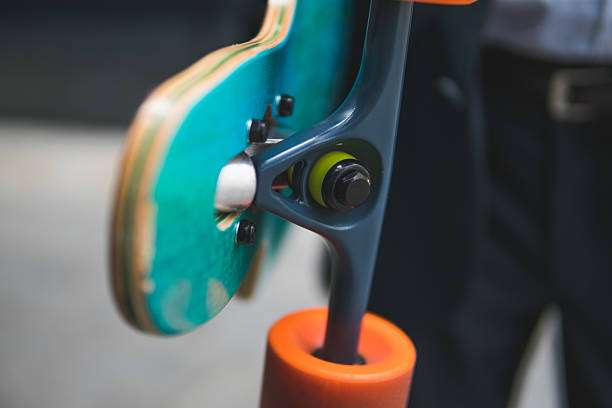
- Drop-Through: Trucks are mounted through the board, lowering the board and bringing it closer to the ground.
- Lower center of gravity: This is the biggest advantage for beginners. A lower center of gravity means greater stability, making it easier to find your balance and less likely to fall.
- Pushing the board is easier: Because the board is close to the ground, your legs bend at a smaller angle when you push the board with your feet, which greatly reduces leg fatigue and is especially suitable for beginners who need to commute long distances or skate for long periods of time.
- More stable handling: At higher speeds, the low center of gravity provides greater confidence.
- Top Mount: The wheel frame is installed below the board surface, which is higher up.
- With a higher center of gravity, it is more agile and has a faster turning response, making it suitable for advanced players to perform more precise control and more aggressive turns.
- For beginners, this means needing better balance and more leg strength.
In summary, the Drop-Through design significantly reduces the learning curve, allowing you to enjoy gliding more quickly.
3. Flexibility: Find the riding comfort level that suits you.
Advice for beginners: Choose a board with medium flex (Flex 2) or soft flex (Flex 3) based on your weight. If you’re really unsure, medium flex is always a safe bet.
Why it matters: The flex of a riding board refers to the degree to which the board can bend under stress. It directly affects your riding experience and your ability to absorb road vibrations.
- Soft and elastic (Flex 3):
- Most comfortable: It absorbs road bumps best, providing the “softest” riding experience, like walking on clouds.
- Suitable for lighter individuals: Recommended for beginners weighing less than 160 pounds (approximately 72.5 kg).
- Disadvantages: It feels unstable at high speeds and has low energy transfer efficiency.
- Medium flexibility (Flex 2):
- A well-balanced choice: It strikes a good balance between comfort and stability. It absorbs some road vibrations while providing sufficient support.
- Most versatile: Suitable for beginners weighing between 140 and 200 pounds (approximately 63.5 to 90.7 kilograms), making it an ideal choice for most people.
- Stiff and flexible (Flex 1):
- Most stable: It has almost no elasticity and the highest energy transfer efficiency, making it suitable for high-speed gliding and hardcore players.
- Suitable for heavy riders: Recommended for beginners weighing 200 pounds (about 90.7 kg) or more, or for riders who aspire to downhill in the future.
- Disadvantages: It has almost no ability to absorb road vibrations, resulting in a relatively “stiff” riding experience.
In summary: boards with higher elasticity are more comfortable, but relatively less stable; boards with lower elasticity are more stable, but less comfortable. Beginners should prioritize comfort and vibration absorption.
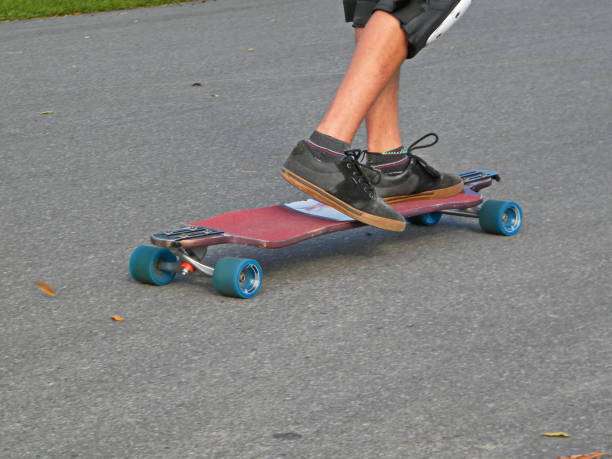
4. Wheels: Smooth rolling, unaffected by road conditions.
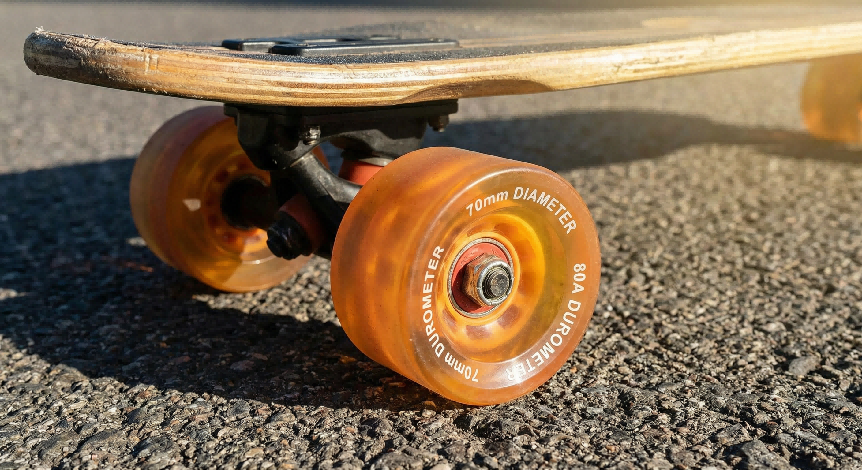
Advice for beginners: Choose wheels with a diameter of 70 mm or more and a hardness between 78A and 82A.
Why it matters: The wheels are the only part of the longboard that comes into contact with the ground, and their selection directly affects your riding experience.
- Diameter:
- 70mm and above: For beginners, larger wheels mean better traction. They can easily roll over small stones, cracks, and uneven surfaces without giving you a sudden jolt, maintaining a smooth and confident glide.
- Less than 65mm: Smaller wheels are lighter and accelerate faster, but they can get stuck on even small obstacles and may even cause you to fall. Beginners should avoid them.
- Hardness: Represented by the “A” value, the lower the value, the softer the material.
- 78A–82A (soft wheels): This is the golden hardness for urban commuting and leisure gliding.
- Excellent shock absorption: It can effectively absorb road vibrations, making your feet feel more comfortable and reducing fatigue from long-term gliding.
- Strong grip: Soft wheels offer better grip, giving you more confidence when turning and reducing the likelihood of slipping.
- with a stiffness higher than 85A: Stiffer wheels are faster, but have poor shock absorption and relatively weak grip. Beginners should avoid them unless you know for sure you need them to perform tricks like drifting.
- 78A–82A (soft wheels): This is the golden hardness for urban commuting and leisure gliding.
In summary, large-diameter wheels with moderate stiffness provide beginners with the smoothest, most comfortable, and most confident gliding experience in urban environments.
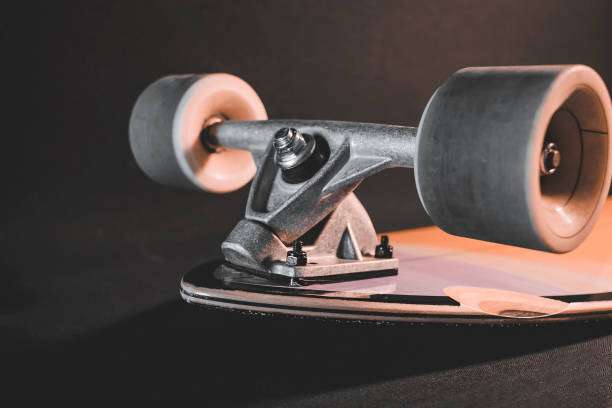
5. Bearings: Don’t let them extinguish your enthusiasm.
Advice for beginners: Choose bearings of at least ABEC-7 or ABEC-9 grade.
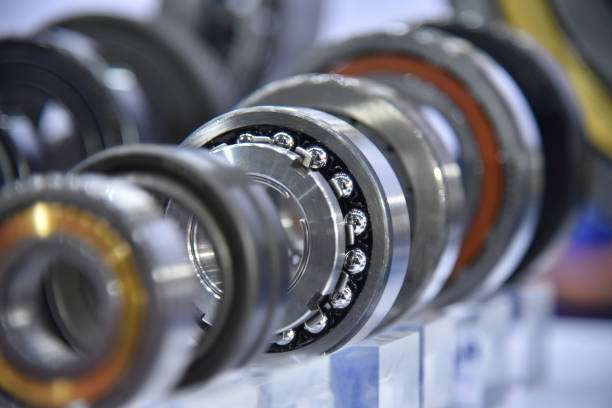
Why it matters: Bearings are small internal components of a wheel that determine how fast and smoothly it spins. A good bearing can make your work much easier, while a bad bearing will make every push feel like a chore.
- High-quality bearings (ABEC-7 / ABEC-9):
- Smooth and energy-saving: Allows your board to glide a greater distance after each push, reducing the number of pushes and saving energy.
- Superior riding experience: Provides a quieter, smoother gliding feel, making it easier for you to maintain speed and rhythm.
- Low-quality bearings (ABEC-1 / Unrated):
- Boards priced below $70 often come with low-quality or even unrated bearings. These bearings tend to be high-resistance, not smooth, and may even produce a harsh grinding sound.
- Learning obstacles: These can make beginners feel that longboards are “difficult to ride” or “impossible to push,” which can severely dampen their enthusiasm for learning and even make them give up.
In summary, bearings are the “heart” of a longboard. Investing in a good pair of bearings can significantly improve your riding experience and make you fall in love with longboarding faster.
How much money should you actually spend?
Frankly, money isn’t everything, but it can certainly help you avoid many pitfalls in the beginning. Choosing a high-quality long plank is fundamental to ensuring a smooth and enjoyable learning process.
| Price Range | Description |
|---|---|
| Below $70 | Absolutely avoid these! These boards are almost always rebranded products, featuring hard, plastic-looking wheels, wheel frames that are barely steerable, and bearings that rub and creak. They won’t bring you any fun; they’ll only make the learning process incredibly difficult, ultimately causing you to completely lose interest. We’ve seen far too many beginners give up after buying such boards. |
| $90–$150 | This is the starting point for a “real” brand-name entry-level longboard. A board at this price point will allow you to learn smoothly and experience the joy of longboarding. |
| $150–$250 | The golden area of the mid-range price. Longboards in this price range typically come with better frame wheels, smoother wheels, and higher-quality bearings. You’ll experience a more comfortable and stable ride. |
| $250–$309 | High-end entry-level full boards. Boards in this price range typically use lighter materials and higher-spec components, resulting in a superior riding experience. If you know you’ll stick with riding, this investment is definitely worthwhile. |
| $400 and above | This falls into the category of custom or professional boards, which are not suitable for beginners. You don’t need to consider this price range at all when you’re starting out. |
BuyLongboard is committed to providing a superior beginner experience. Our longboards range from $137 to $309, ensuring you get not just the cheapest, but the ones that will build your confidence and allow you to fully enjoy longboarding. Every board is ready to use right out of the box, no assembly required. We believe that the first experience is crucial; it can determine whether you fall in love with longboarding.
Different needs require different board types: Your goals determine your board type.
Why are you buying a longboard? Different riding purposes require different board configurations. Let us help you quickly find the one that best suits you.
Campus/city commuters: Effortless travel, say goodbye to traffic jams
If you plan to use a longboard for getting around campus or for short commutes in the city, you’ll need a stable, comfortable, and lightweight board.
- Recommended configuration:
- Length: 38 inches – 42 inches
- Installation method: Drop-Through or Drop-Down
- Wheels: Soft wheels of 70 mm or more (78A–82A)
- Elasticity: Medium elasticity
- Other: The board should ideally weigh less than 7 pounds (about 3.2 kg) for easy carrying.
Casual cruisers/lifestyle enthusiasts: Enjoy gliding and express your individuality.
If you just want to glide easily in a park, by the sea, or in your neighborhood, enjoying the sunshine and breeze, then comfort and aesthetics might be more important to you.
- Recommended configuration:
- Length: 38 inches – 44 inches
- Installation methods: Pintail (torpedo plate) or Drop-Through (undermount)
- Elasticity: Soft and elastic
- Other: Choose the panel design that you fall in love with at first sight, because aesthetics are important here.
Aspiring to be a skateboarder: Dancing on the streets, expressing yourself
If you are drawn to the elegance and skill of longboard dancing and aspire to dance on a board in the future, then you need a board designed specifically for dance.
- Recommended configuration:
- Length: 42 inches – 46 inches
- Dancer Deck Type: Symmetrical Dancer Deck
- Flexibility: Medium-Soft Flex
- Other: The board surface should be wide enough to provide ample space for your foot movements.
Gift buyers: Send surprises and spread joy
If you are buying a longboard as a gift for a friend or family member (such as a child or partner), you may place more emphasis on the board’s integrity, appearance, and price range.
- Recommended configuration:
- Length: 33 inches – 40 inches (Complete Board)
- Emphasis: Panel design and visual appeal
- Important note: Be sure to choose the complete board. Gift recipients don’t want to receive a bunch of parts and then have to assemble it themselves.
- Price range: $139–$179 is the ideal price for a gift.
5 common mistakes beginners make when buying stocks
As your longtime friend, I’ve seen too many beginners make these mistakes, leading to a poor learning experience or even giving up. Learn from these mistakes, and you can avoid many pitfalls.
- Focusing solely on price and blindly chasing the cheapest option: boards under $70 will actively increase the difficulty of your learning experience, rather than make it easier. They will make you feel that longboarding is “difficult” and “not fun,” rather than addressing the real challenge.
- Judging solely by appearance and ignoring features: A board that looks cool is just a pretty decoration if its elasticity, wheel stiffness, or installation method is not suitable for your weight and intended use, rather than a useful longboard.
- Skipping protective gear and ignoring safety: Most novice injuries are caused by instinctively bracing themselves with their hands, resulting in wrist fractures. A helmet and a wrist guard are the bare minimum of safety, allowing you to try and fall with more confidence.
- Choosing the wrong board type for your intended use: If you want to glide easily around campus but buy a stiff downhill board, your experience will be terrible. Defining your primary purpose is crucial for choosing the right board.
- Over-analyzing and procrastinating: Getting stuck in “analysis paralysis,” always feeling you need another three weeks of research before making a decision, and missing the best learning opportunity. Trust me, by following this guide, you’ll make a good enough choice and then just start enjoying the ride!
Don’t forget to protect your equipment!
Safety is the prerequisite for enjoying longboarding. Remember, a good board will give you more confidence to skate, while good protective gear will allow you to fall and learn with more peace of mind.
- Helmet: This is the non-negotiable minimum requirement. Always choose a skateboarding helmet that is ASTM F1492 certified. Bicycle helmets and skateboarding helmets are designed differently, offering different levels of protection against different types of impacts. Skateboarding helmets typically focus more on multiple impacts and side protection.
- Wristbands: The most important protective gear after helmets. When beginners fall, their instinctive reaction is to use their hands to brace themselves, which can easily lead to wrist fractures. A good wristband can effectively protect your wrist.
- Knee braces: If you plan to try some advanced moves or glide on uneven surfaces, knee braces can provide extra protection.
A complete set of entry-level protective gear typically costs between $30 and $80, making it an excellent value investment.
Ready to stop research and start gliding?
You’ve mastered all the core knowledge for beginners choosing their longboard. Now, it’s time to put that knowledge into practice and select your first longboard.
Frequently Asked Questions
We know you may still have some questions, so here’s a compilation of some of the most frequently asked questions by beginners:
Q: What size longboard should a beginner choose?
A: Most adult beginners are recommended to choose 38-42 inches. If you are under 165 cm tall, or if you are buying for a teenager, then a 33-38 inch board would be more suitable.
Q: Should beginners choose Drop-Through or Top Mount installation?
A: Without a doubt, choose Drop-Through. It significantly lowers the board’s center of gravity, making it easier to maintain balance and requiring less effort from your legs when pushing the board, making it ideal for beginners to ski long distances.
Q: Should beginners buy a complete board or assemble one themselves?
A: For beginners, always choose a complete board. Assembling one requires in-depth knowledge of the various parts and knowing what you want. As a beginner, you won’t know this until you actually skate. All BuyLongboard complete boards are ready to use out of the box and require no assembly.
Q: How much should I spend on a longboard?
Q: Which longboard is best for commuting to university campus?
A: Choose a 38-42 inch drop-through full board with soft wheels around 78A, and ideally weigh under 7 pounds. This configuration is both stable and lightweight, perfect for navigating around campus.
Q: What if the size I bought isn’t right?
A: BuyLongboard offers a 30-day no-questions-asked return policy. You can take the board, try it out, and if it doesn’t meet your needs, you can return it at any time. Our goal is to help you buy the perfect board for you.
Q: Do I need to assemble the board I bought?
A: No! All BuyLongboard boards are professionally assembled and ready to use right out of the box. We also include a T-tool to help you adjust the wheel tension to your liking.