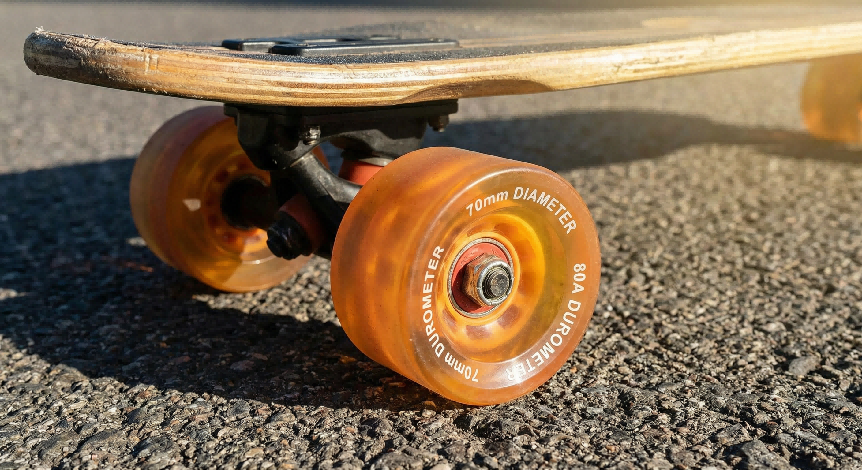
You’ve decided you want a longboard. But when you start browsing, dozens of different lengths, shapes, and sizes can be overwhelming—what do these parameters actually mean for your riding experience? Don’t worry, I ‘ll explain everything.
This guide will walk you step-by-step through seven key choices. With each question you answer, your ideal longboard will become clearer. Like a seasoned friend, we’ll patiently and systematically guide you to ensure you ultimately choose a board that will give you confidence and enjoyment on your longboarding journey. Let’s begin!
Before looking at the specifications—let’s start with one question.
Before delving into the various technical specifications of longboards, we must first ask ourselves a fundamental question:
What will you primarily use it for?
Your primary purpose will determine the choice of board shape, length, flexibility, and wheels. No single board can perfectly handle everything, but by clarifying your core needs, we can find the one best suited for you.
Campus/City Commuting
If you want to use a longboard to get from point A to point B faster, traversing campuses or city streets, then your primary requirements are lightness, low center of gravity, and high efficiency.
- Recommended specifications: Drop-Through or Drop-Down board shape, 38-42 inch length, medium flexibility.
Leisure cruise/weekend ride
If you’re looking to relax, explore the scenery, and enjoy a leisurely ride on the weekend, then a comfortable ride, a forgiving board, and an attractive appearance are your priorities.
- Recommended specifications: Pintail or Drop-Through board shape, 38-44 inch length, soft to medium elasticity.
Learning Carving (S-shaped turn)
Carving is one of the most fascinating skills in longboarding. If you want to gradually improve your skills and have more fun by using S-shaped turns, then you need a responsive yet stable board to build confidence.
- Recommended specifications: Top Mount or Drop-Through board shape, 38-42 inch length, medium flexibility.
Downhill/Speed
If you’re looking for an adrenaline-pumping, high-speed experience, riding uphill, then you need a board that maintains maximum stability at high speeds, has a stiff surface, and a low center of gravity.
- Recommended specifications: Double Drop or Drop-Down board shape, rigid and flexible, 180mm support.
Gift/Uncertain PurposeImportant note: Downhill riding is not recommended as your first longboard. This type of riding requires higher skill and experience.
If you are buying this for someone else, or if you are a complete beginner with no clear idea of its purpose and want a versatile and easy-to-use board.
Default recommendation: Drop-Through board shape, 38-42 inch length, medium flexibility. This is the most forgiving and versatile choice for beginners.

Board shape—the difference between appearance and actual riding experience
The shape of a longboard goes far beyond mere appearance; it directly affects the board’s center of gravity, ease of pushing, cornering agility, and overall stability. Below are some common board shapes and their impact on the riding experience:
Pintail
Pintail is a classic teardrop or pointed tail shape. It is narrower at the head and tail and wider in the middle.
- Features: The wheel cutout prevents “wheel bite” during sharp turns, where the wheels hit the board surface. It’s a natural cruising shape that’s stable, predictable, and beginner-friendly.
- Suitable for: easy cruising, flat roads, and scenic riding.
- Not suitable for: long-distance pushing (high center of gravity).
Drop-Through (Recommended default selection)
Drop-Through panels are characterized by brackets that are installed through holes in the panel, rather than being installed underneath it.
- Features: This lowers the board’s center of gravity by about 1 inch, lower than the Top Mount. A lower center of gravity means less effort is needed to push (the knees don’t need to bend as much), and it feels more stable for beginners. Its cornering sensitivity is slightly lower than the Top Mount.
- Suitable for: commuting, beginners, and long-distance cycling.
Our recommendation: For most first-time longboard buyers, Drop-Through is the safest and most recommended entry-level option.
- Top Mount
Top mount is the most traditional installation method, where the board is mounted directly on top of the bracket.
- Features: The board has a higher center of gravity, meaning it’s more agile and dynamic when cornering. Once you’ve mastered the basic balance, the Top Mount will make cornering even more fun. Its learning curve is slightly higher than the Drop-Through.
- Suitable for: Carving, intermediate riders, and riders seeking a more responsive feel.
Drop-Down
The characteristic of a drop-down panel is that the platform on the panel is lower than the bracket mounting point.
- Features: Its center of gravity is lower than Drop-Through, making it very stable and resulting in minimal leg fatigue during long rides.
- Suitable for: long-distance commuters and heavier riders.
Tip: Drop-Down is relatively uncommon as a beginner’s first board.
Double Drop
Double Drop combines both Drop-Through and Drop-Down installation methods.
- Features: It has the lowest center of gravity.
- Suitable for: Professional setups focused on downhill and long distance push (LDP).
Note: This is definitely not a board suitable for beginners.
Dancer
Dancer boards are typically long (42-48 inches), wide, and symmetrical.
- Features: Designed specifically for footwork/dancing, allowing riders to perform a variety of movements and tricks on the board.
- Suitable for: Only choose this if you are specifically aiming for longboard dancing.
Board Length – Size Guide
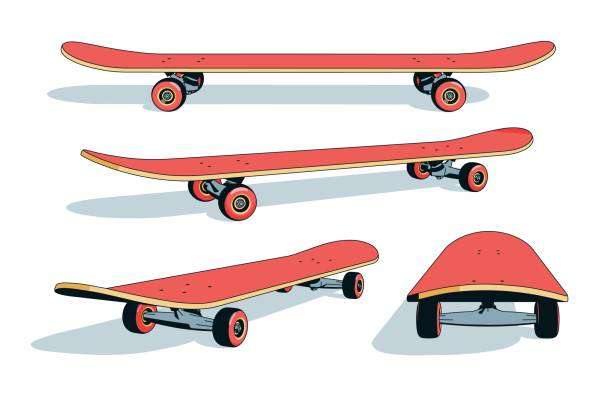
Choosing the right board length is crucial to your riding experience. It affects not only stability but also handling and portability. The “fit” between you and your board largely depends on whether the length matches your height and intended use.
Your height is important
Longboard lengths are typically measured in inches (“), and the following are recommendations based on rider height:
| rider height range | Recommended board length range |
|---|---|
| Children and teenagers under 5 feet | 28″–33″ (Mini Cruiser Range) |
| 5’0″–5’8″ | 33″–40″ (38″ is a safe starting point) |
| 5’8″–6’2″ (Most adult buyers) | 38″–42″ (40″ is the most commonly recommended length) |
| Riders 6’2″ or longer / accustomed to a wide stance | 42″–46″ (provides more foot room) |
Subtle differences in application
- Commuting: If you are commuting, it is recommended to choose a slightly shorter board (38″–40″), which will be easier to carry and handle in crowds.
- Cruise/Carving: If you are primarily using it for recreational cruising or driving, choosing a slightly longer board (40″–44″) will provide greater stability and more foot space to adjust the center of gravity.
Board width — to match your feet
While the width of a board isn’t as noticeable as its length, it directly affects your comfort and control when standing. Choosing a width that roughly matches your shoe size will make you feel more stable and natural on the board.
Shoe Size and Board Width Guide
The following are recommendations for board width based on US men’s shoe sizes:
| Shoe size range | Recommended board width range |
|---|---|
| US men’s shoe size 8 and below (women’s shoe size 10) | 8″–8.5″ |
| US men’s shoe sizes 8–11 (most common) | 8.5″–9.5″ |
| US men’s shoe size 11 and up / Prefers a wide stance | 9.5″–10″+ |
Simple Laws
A simple rule of thumb: the width of the board should roughly match the length of your bare feet. This will give your toes and heels enough room, without making the board feel too wide to control.
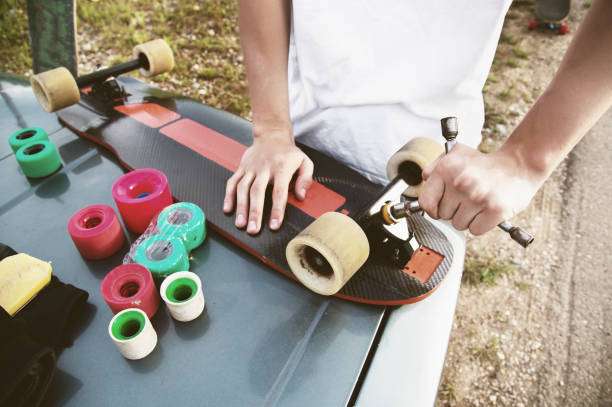
Flexibility—a specification that most people overlook but has the greatest impact.
The flexibility of a longboard, or “flex,” is a parameter that many novice buyers tend to overlook, but it actually has the greatest impact on the riding experience.
It’s not just about whether the board will “bend,” but also about how you feel and the energy feedback every time you push the board, turn, or even run over small stones on the road.
Understanding elasticity: More than just “flexible”
Elasticity describes the degree to which a plate bends when subjected to force. This bending will:
- Absorbs road vibrations: Soft surfaces absorb vibrations from uneven surfaces better, making you feel like you are “floating” rather than bumping.
- Storing and releasing energy: When driving, the soft paddles act like springs, storing the energy you apply when you push down and releasing it at the end of the turn, providing a “launching” feel that makes driving smoother and more rhythmic.
- Impact on stability: A board that is too soft may be unstable at high speeds, while a board that is too hard will transmit all road feedback directly to your feet.
Explanation of elasticity levels
Boards typically come in three elasticity levels:
Flexibility (Flex 3):
- Features: Actively absorbs road vibrations, providing a bouncy and tolerant feel underfoot.
- Suitable for: Lighter riders (under 150 lbs), areas with poor road conditions, and beginners who want maximum tolerance.
- Not suitable for: downhill riding, heavy riders.
Medium flexibility (Flex 2):
- Features: Achieves a balance between shock absorption and responsiveness.
- Suitable for: riders weighing between 140-200 pounds. Versatile, suitable for cruising, commuting, and light driving.
Recommended default choice: When you’re unsure, medium flexibility is the best option.
Stiff yet flexible (Flex 1):
- Features: Absolutely no energy absorption – all road input is directly transmitted to the feet. Maximum energy transfer, highly efficient.
- Suitable for: Riders weighing over 200 pounds, downhill riding, and high-speed carrying.
- Not suitable for: areas with poor road conditions, or for riders seeking a leisurely and comfortable cruise.
Find Your Flexibility: A Weight-Based Guide
Choosing the right elasticity is closely related to your weight. Here is a quick reference guide:
| rider weight range | Recommended elasticity level |
|---|---|
| Under 130 pounds | soft |
| 130–180 lbs | Soft to medium |
| 180–220 lbs | Medium to hard |
| 220 pounds and above | hard |
Tip: If your weight falls between the two categories, it’s recommended to choose a higher level of stiffness, as stability is more important in the initial learning stages. If you weigh over 200 pounds, prioritize a firm yet flexible Canadian maple board surface and be sure to check the load-bearing capacity listed on the product page.
Default selection
When you’re unsure, choose medium flexibility. It’s the most versatile option, adaptable to different riding conditions and skill level progression.
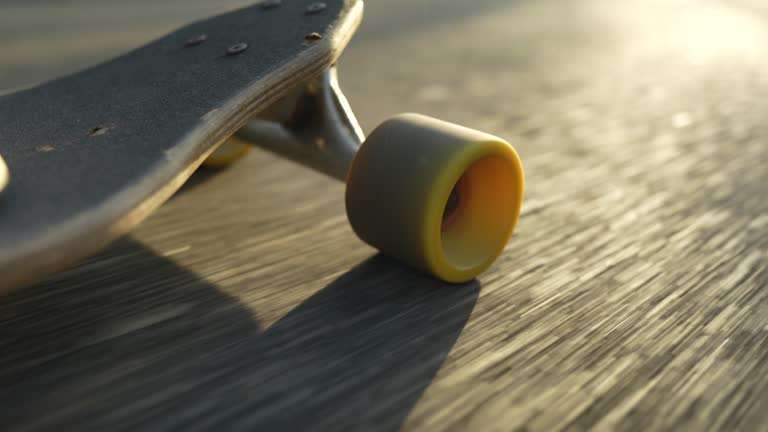
Wheels — Two numbers that change your skateboarding experience
The wheels on a longboard are the only part of the board that contacts the ground, and their specifications greatly affect your speed, stability, and ability to easily traverse obstacles.
You need to pay attention to two key figures: diameter (size) and stiffness (Durometer).
Wheel diameter: Ability to roll over obstacles
The larger the diameter of the wheel, the easier it is to roll over small cracks, stones and uneven surfaces on the road, while also maintaining a faster rolling speed.
- 60–65 mm: Flexible, technically demanding – not suitable for beginners.
- 65–70 mm: General street riding.
- 70–75 mm: Recommended for beginners – can easily roll over cracks without getting stuck, high pushing efficiency, and comfortable riding.
- 75–80 mm: Maximum rolling speed, suitable for long distances or descents.
Wheel stiffness (Durometer): The balance between grip and stability.
Wheel stiffness is expressed using the A scale (e.g., 78A), with smaller numbers indicating softer wheels and larger numbers indicating stiffer wheels. Stiffness determines a wheel’s grip, vibration absorption capacity, and rolling speed.
- 75A–80A: Very soft. Provides maximum grip and shock absorption. Suitable for rough city streets and heavier riders.
- 78A–82A: Recommended for most beginners. They can “roll over cracks in the pavement without shaking your feet,” providing a comfortable gliding experience.
- 83A–88A: Medium stiffness. Faster speeds but less forgiving. Suitable for light freestyle gliding.
- 89A+: Stiff. Designed for drifting and tricks. Not suitable for cruising.
Specific sensations: Imagine gliding on a rough sidewalk with 78A wheels—it feels like rolling on butter; while with 90A wheels on the same sidewalk, you can clearly feel every crack and every pebble. Soft wheels (78A-82A) absorb the texture of the road surface, giving you a gliding experience. Hard wheels, on the other hand, transmit every bump directly to your feet.
Recommended wheels for beginners
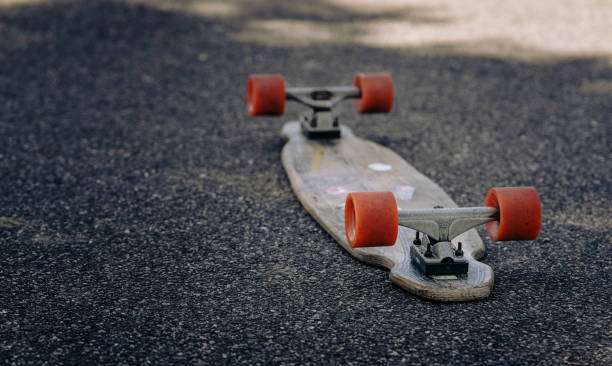
For most beginners, choosing wheels with a diameter of 70mm or more and a stiffness of 78A–82A will give you the most balanced and comfortable riding experience.
Trucks — What you need to know (and what you can ignore)
The kickstand is a crucial component connecting the board and wheels, determining your turning ability and stability.
The good news for beginners is that there aren’t many decisions you really need to make when choosing a kickstand.
Reverse Kingpin (RKP) Bracket: Longboard Standard
- What you need to know: Almost all longboards use reverse kingpin (RKP) brackets. This bracket design provides a wider cornering radius and more stable high-speed performance, making it ideal for longboard cruising and driving needs.
Bracket width: Matches the panel surface
- 150mm stand: Suitable for boards with a width of 9 inches or less.
- 180mm stand: Suitable for boards with a width of 9 inches or more.
Bracket tightness: Your personal preference
- Loose: More flexible when turning, but less stable (not suitable for beginners).
- Tight: More stable, but less responsive when turning.
- Beginner’s starting point: It is recommended to start with a medium-tight setting. As you build confidence and improve your skills, you can gradually loosen it to obtain more responsive turns.
In summary: A good quality longboard bracket is already correctly set up. Your main task is to learn how to use the included T-tool to adjust the bracket tightness according to your riding preferences and confidence level.
Budget — What can you buy at different price points?
When choosing a longboard, budget is a realistic consideration. Understanding what kind of board and riding experience you can get at different price points will help you make an informed decision. I’m committed to providing a high-quality entry-level experience where every penny is worthwhile.
Under $80: Red Alert Zone
Our advice: Avoid buying longboards priced below $80. At this price point, you’re likely to get a board made with cheap materials and inferior components. These boards not only offer a poor riding experience but can also intentionally increase the learning curve, leading to frustration and a faster abandonment of the ride.
$100–$150: Entry-level cycling zone
- Features: This is the entry-level range for longboards. At this price point, you can buy a board that you can ride normally, but the components may be relatively basic.
$150–$220: Mid-range sweet spot
- Features: This price range is the sweet spot for value. You’ll get better components, such as higher-quality bearings, wheels, and plate materials, resulting in a smoother, more comfortable, and more forgiving riding experience.
$220–$279: Premium Full-Board Experience
- Features: In this price range, you get a high-end full-board configuration, including higher-spec brackets and wheels. These boards offer significant improvements in performance, durability, and riding experience.
Our recommendation: If you are certain you will stick with cycling and want the best experience from the start, then this investment is worthwhile.
Comprehensive Consideration—A Shortcut to Three Questions
If you’ve read all of the above and want a quick overview, or a simple decision-making framework when browsing products, here are three key questions to help you quickly pinpoint your target.
Question 1: What is your main purpose?
- It determines what: Your primary use will directly influence the board shape and resilience you choose. For example, commuters might prefer Drop-Through and medium resilience, while recreational cruisers might consider Pintail and soft to medium resilience.
- Recap: Refer again to the “Before looking at the specifications—start with one question” section.
Question 2: How is your physical condition?
- It determines this: Your height and weight will determine the board length and elasticity level you need. Your shoe size will affect the board width.
- Review: Refer to the “Plate Length” and “Flexibility” sections for recommendations that match your physical condition.
Question 3: What is your budget?
- It determines what: Your budget will determine the quality of the boards and the specifications of the components you can choose.
- Review: Refer to the “Budget” section to see what advantages are offered at different price points.
After answering these three questions, your ideal longboard will immediately stand out when you browse our longboard series.
Frequently Asked Questions
What length of longboard should a beginner choose?
What is the difference between Drop-Through and Top Mount?
What kind of flexible longboard should I choose?
Is wheel stiffness really that important?
How do I know if my longboard can support my weight?
I only want to commute; are these specifications important to me?
Can I adjust the board after purchasing it?
If you prefer to see recommended boards directly rather than making your own selections step by step, then check out our 2026 Best Longboard Recommendations for Beginners .