
The number on the box — ABEC 5, ABEC 7, ABEC 9 — is the first thing most people look at when buying longboard bearings. It’s also the least useful thing to look at.
ABEC ratings were developed for industrial machinery: high-speed routers, electric motors, equipment that spins at 20,000–30,000 RPM in a clean, controlled environment. A longboard wheel topping out at 15 mph reaches roughly 1,200 RPM — a small fraction of that — while rolling through grit, water, and the occasional puddle. The ABEC committee doesn’t test for shock loads, side loading from carving, or dirt contamination. Those are exactly the conditions that determine how a longboard bearing actually performs.
This doesn’t mean all bearings are the same. It means the right question isn’t “what ABEC rating?” It’s “what’s this bearing actually built for?” For everything else you need to know about your board’s components, the longboard parts guide is the right starting point.
What Longboard Bearings Actually Do
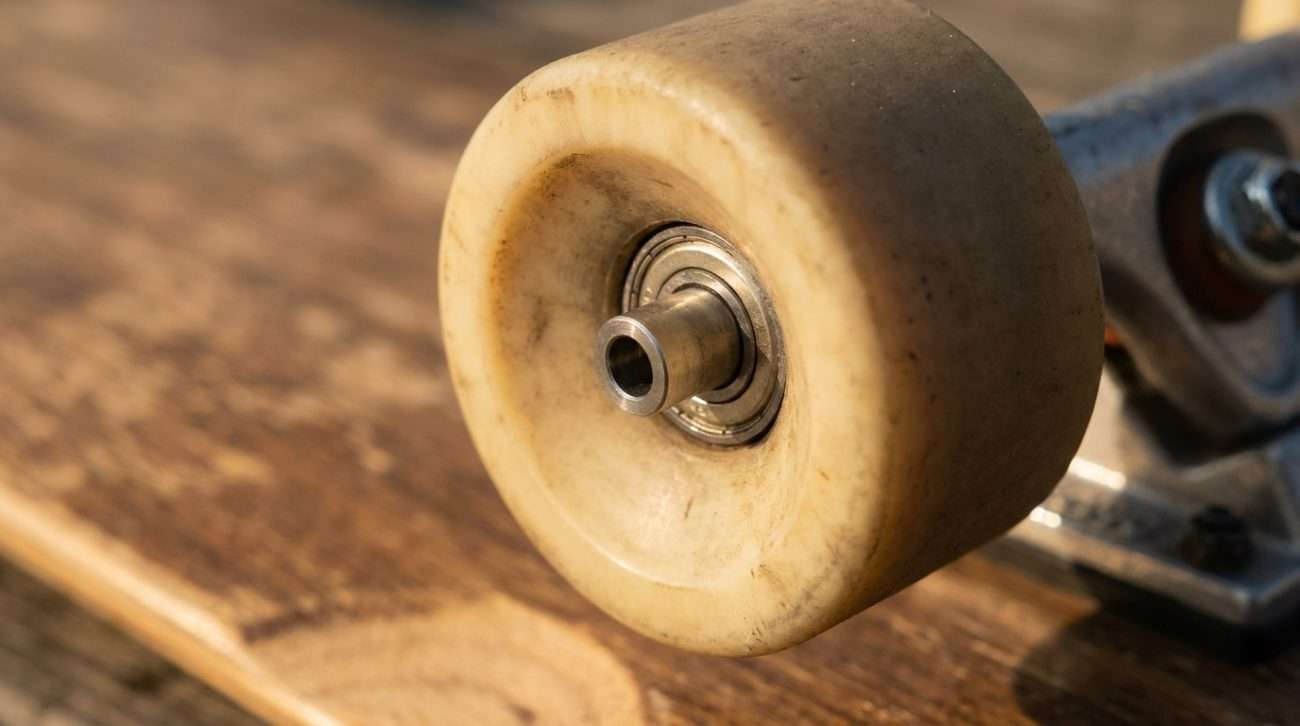
A bearing is the interface between your wheel and your axle. Its job is to let the wheel spin freely while handling the load of your body weight, the friction of the road, and the lateral force of every turn you make.
Every longboard wheel runs on two bearings — one on each side of the wheel hub. Each bearing has five components:
| Component | Function |
| Outer race | Steel ring that presses into the wheel hub |
| Inner race | Steel ring that slides over the truck axle |
| Bearing balls | 7 steel (or ceramic) balls that allow rotation |
| Cage / retainer | Keeps the balls evenly spaced |
| Dust shield | Covers the bearing face to block dirt and moisture |
The quality of these components — not the ABEC number — determines how long your bearings last and how smoothly they roll. A bearing with precisely machined races and a well-fitted shield will outlast an ABEC 9 bearing with poor material quality in real-world riding conditions.
Why ABEC Ratings Don’t Apply to Longboarding
ABEC measures dimensional precision — how close to perfect the bearing’s geometry is. That matters in high-RPM industrial applications. It doesn’t translate to longboard performance.
Here’s the specific problem: ABEC testing covers radial loads (pure forward spin) but not axial or side loads. Every time you carve, your board applies significant lateral force to the bearings — exactly what ABEC doesn’t measure. Bones Bearings, the most respected name in skate bearings, dropped ABEC ratings entirely and introduced their own “Skate Rated” standard specifically because the ABEC spec was measuring the wrong things for skating environments.
The reason ABEC numbers are still everywhere in skate shops is marketing, not performance. They’re easy to understand, easy to print on packaging, and easy to use as a justification for higher prices. A bearing rated ABEC 9 costs more than ABEC 5. That price difference is real. The performance difference on a longboard, under real riding conditions, is not.
What to Actually Look For When Buying Bearings
Skip the ABEC number. These four things determine whether a bearing is worth buying for a longboard.
01 · Skate-rated vs ABEC-rated
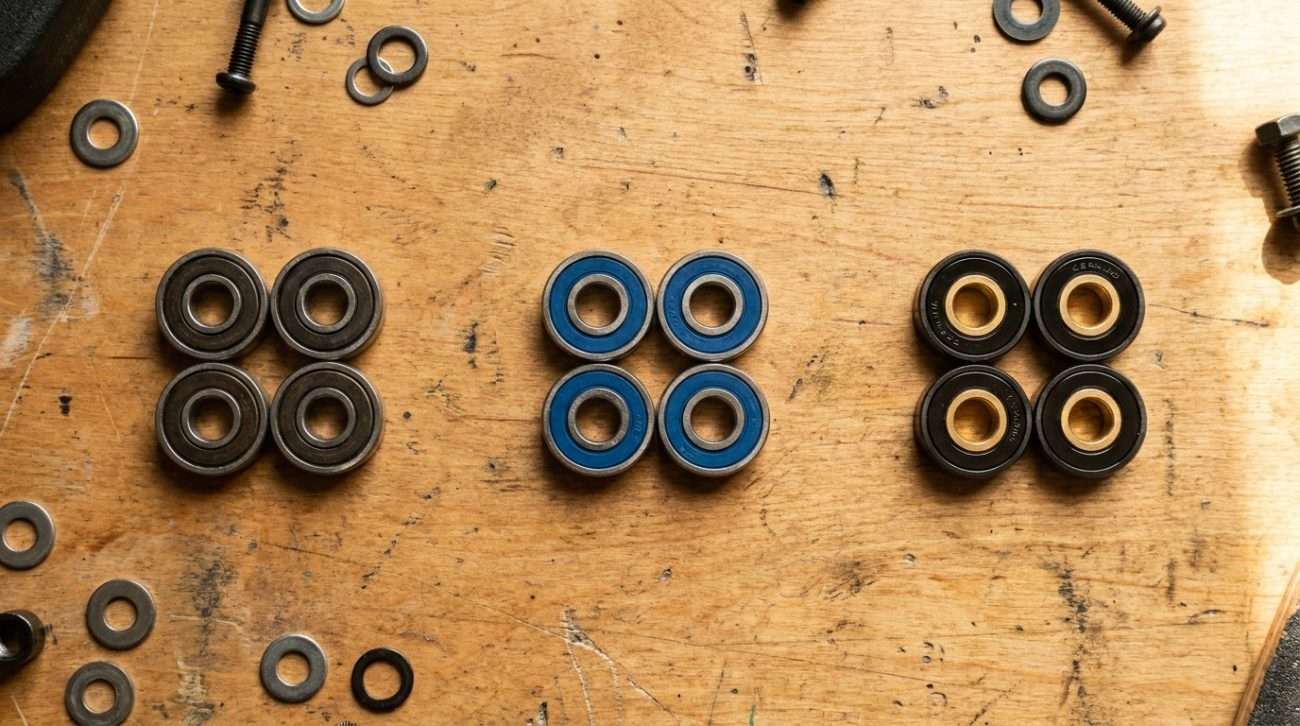
Look for bearings explicitly designed for skating — Bones Reds, Zealous, and similar options are built with tighter internal clearances and materials chosen for impact resistance and side loading. They cost $15–$25 for a set of 8 and outperform most ABEC 7–9 bearings in real riding conditions. If a bearing doesn’t mention skating in its design brief, it was probably made for something else and repackaged.
02 · Shield type: removable vs sealed
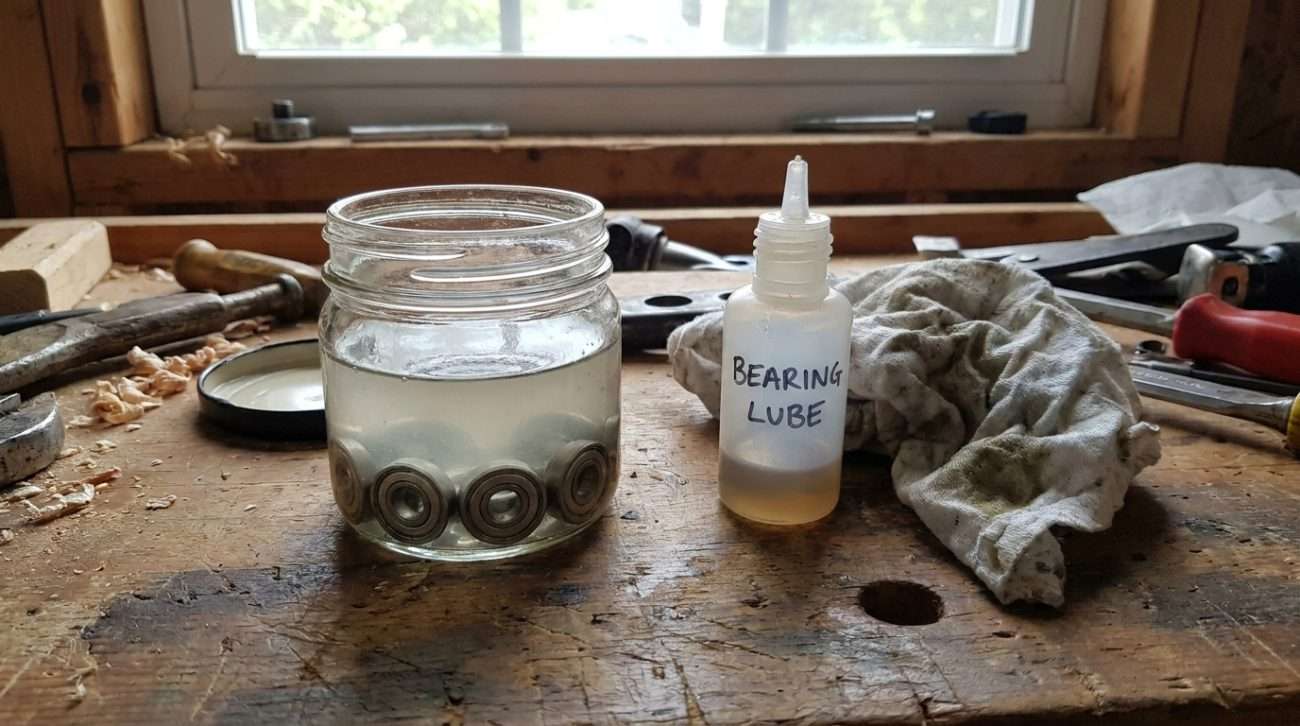
Bearings with removable rubber or metal shields can be cleaned and re-lubricated — extend their life significantly if you ride in dusty or wet conditions. Fully sealed bearings (marked ZZ) offer better initial protection but can’t be serviced. For most longboarders who commute or cruise, removable-shield bearings and occasional cleaning is the better long-term choice. Our longboard maintenance guide covers the cleaning process in detail.
03 · Steel vs ceramic balls
Ceramic bearings are lighter, harder, and theoretically smoother. In practice, for recreational and commute riding, the difference in roll feel is minimal — ceramic bearings don’t spin meaningfully faster because bearing friction from grease and shields accounts for most resistance, not the ball material. Ceramic sets cost $40–$80+. Unless you’re freeriding or downhilling seriously, steel bearings at a fraction of the price perform the same in everyday riding.
04 · Bearing spacers
Spacers are small cylindrical inserts that sit between the two bearings inside each wheel. They distribute load evenly across both bearings and prevent them from unseating under lateral force during carving or slides. Most complete longboards don’t include them. At $5–$10 for a set, they’re one of the better-value upgrades for anyone riding regularly. If you’re already thinking about wheels, the longboard wheels guide explains how wheel width affects spacer sizing.
Honest Recommendations by Budget
Most riders don’t need to think about bearings much — a decent set lasts 6–18 months with occasional cleaning, and replacing them costs less than $25. Here’s how to spend that money well:
Under $15 — Bones Reds
The standard recommendation for a reason. Steel, Skate Rated, removable shields, and widely available. They roll smoothly out of the box and respond well to cleaning. If you’re on a complete board and the stock bearings feel rough, Bones Reds are the default upgrade. No further research required.
$15–$30 — Zealous Built-In Bearings
Zealous bearings include built-in spacers and speed rings, which means you can skip buying those separately. The integrated design also makes installation slightly more forgiving. Good option if you’re building a complete from parts or if your current setup doesn’t have spacers. The how to choose a longboard truck guide has relevant context on axle sizing if you’re assembling components.
$30+ — Bones Swiss or Ceramics
Bones Swiss are the benchmark for skate bearings — tighter tolerances than Reds, noticeably smoother, longer-lasting. Worth the price for riders who are on their board daily and can feel the difference. Ceramic sets above $40 are for riders who specifically want to minimize rotating weight for freeride or downhill — not a meaningful upgrade for cruising or commuting.
Frequently Asked Questions
Do ABEC 9 bearings make you go faster?
How long do longboard bearings last?
Do I need bearing spacers?
Still figuring out your first complete setup?
Most beginner-friendly completes ship with bearings that are good enough to start — you’ll know when it’s time to upgrade. Until then, deck shape and wheel hardness matter more. Our beginner guide walks through both.
Browse the Beginner Guide →About the Author

Jordan Ellis
Founder of Groveride · Former urban transportation analyst, Portland OR · Longboard rider since 2019 · Spent 5 years studying how people move through cities before building the board-buying guide that should have existed.
Read Jordan’s full story →